Exeter River Run
Living Shoreline Stabilization Project
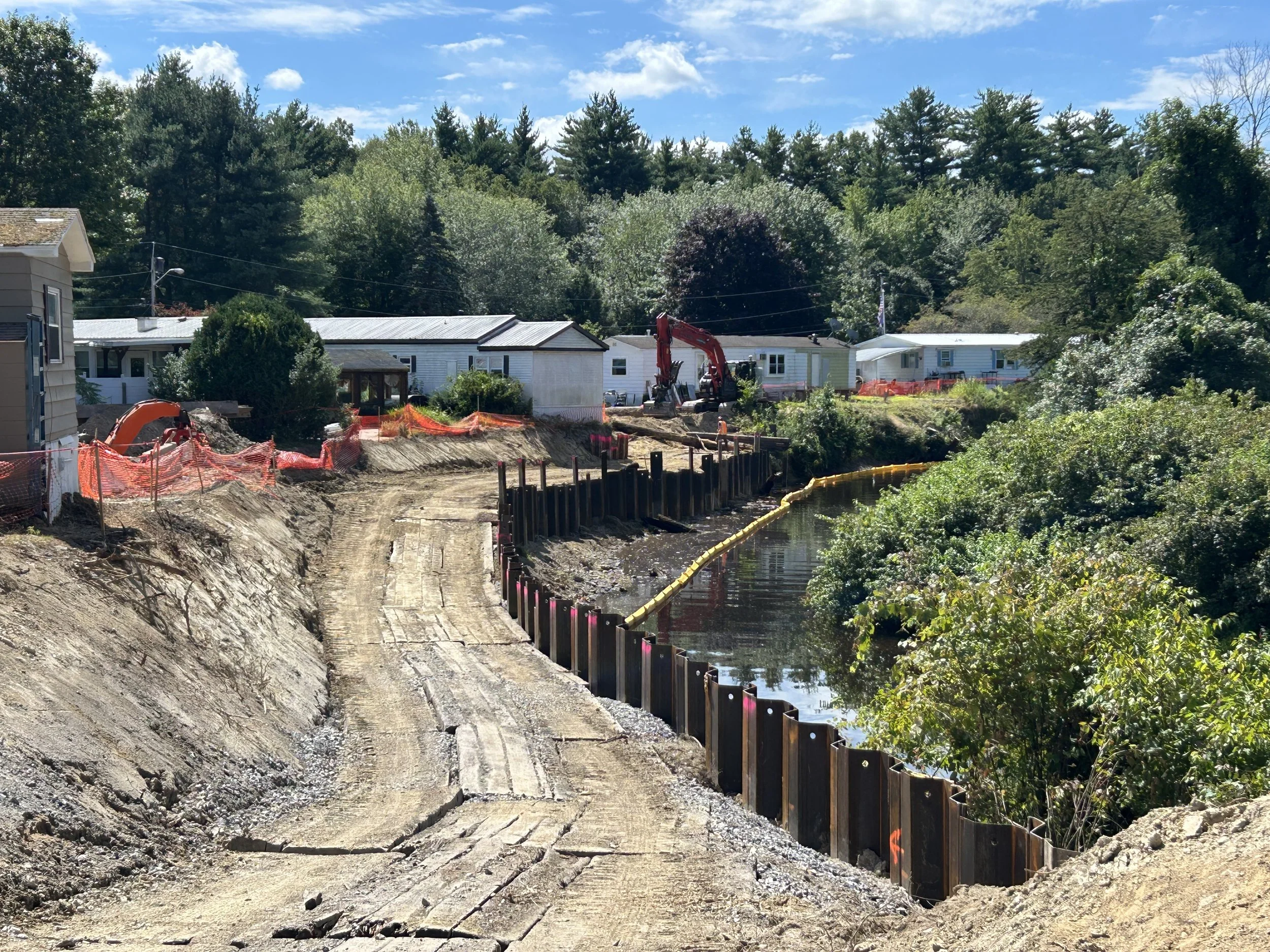
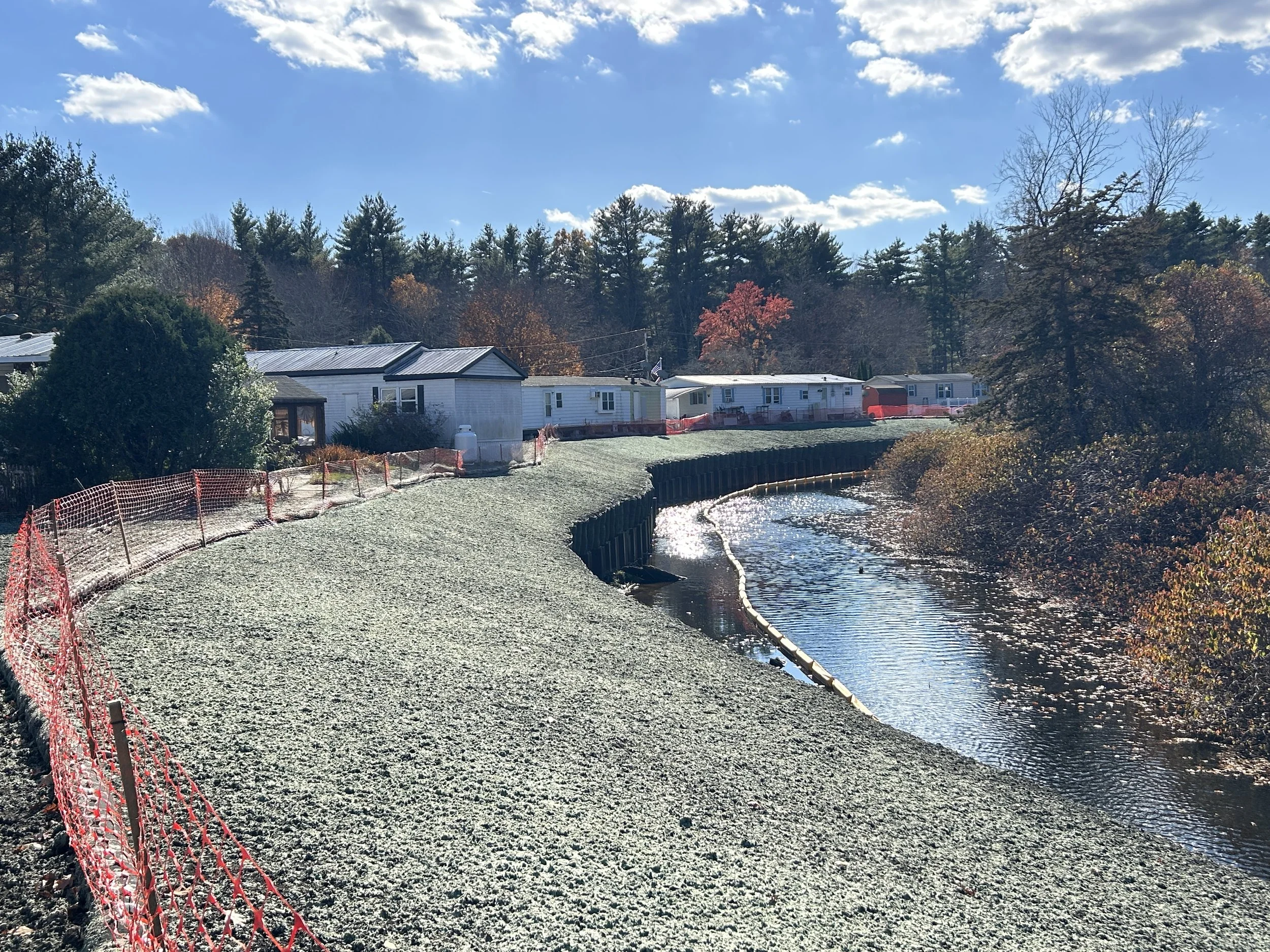
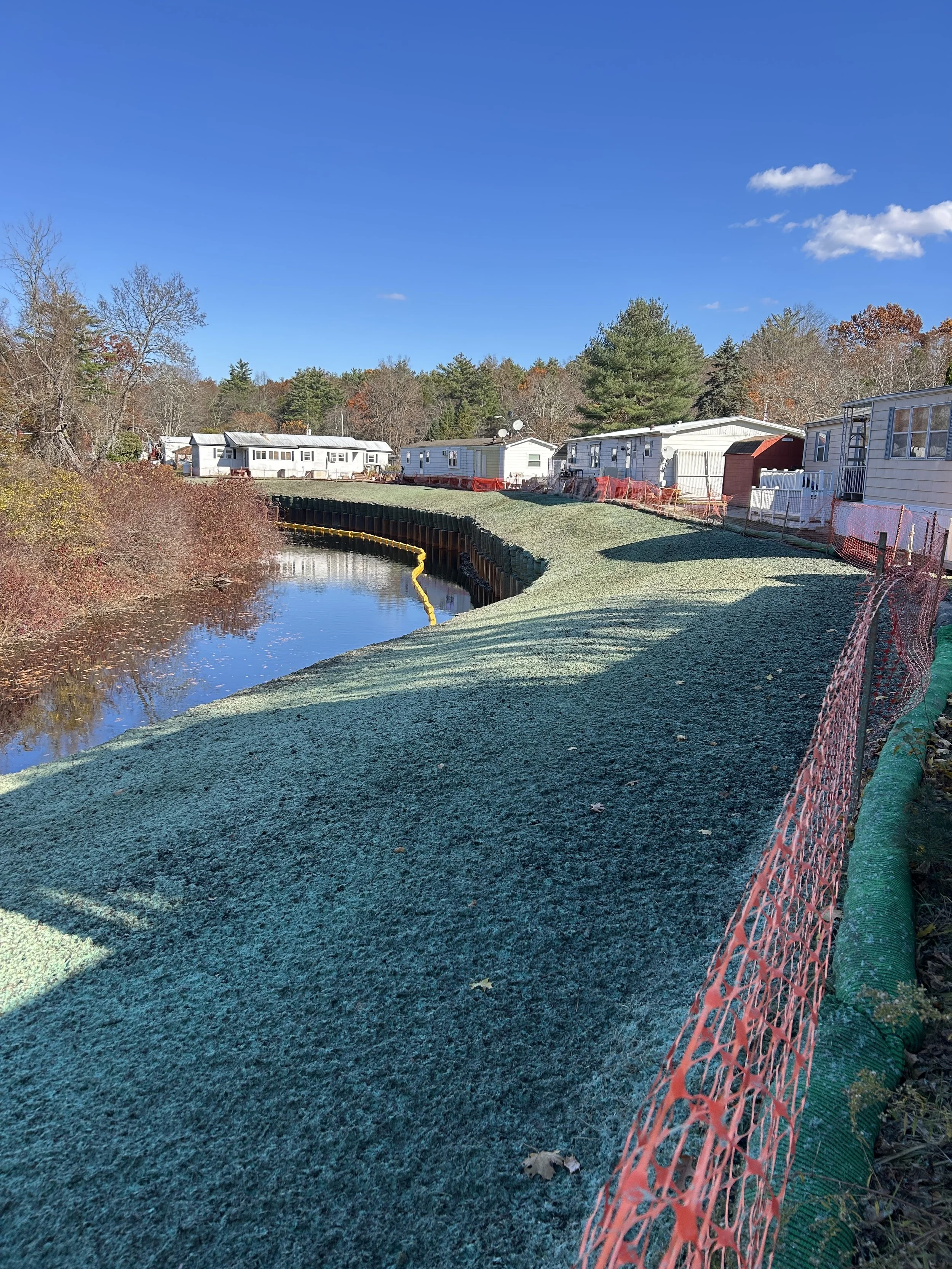
The Exeter River Run Riverbank Stabilization Project is restoring approximately 550 feet of severely eroding riverbank along the Exeter River using an innovative engineered stabilization approach designed to support long-term bank stability and native vegetation.
PROJECT AT-A-GLANCE:
Location:
Exeter, NH (River Run Neighborhood)
Restoration:
550+ linear feet of riverbank
Construction Timeline:
August, 2026 - October, 2026
Project Overview:
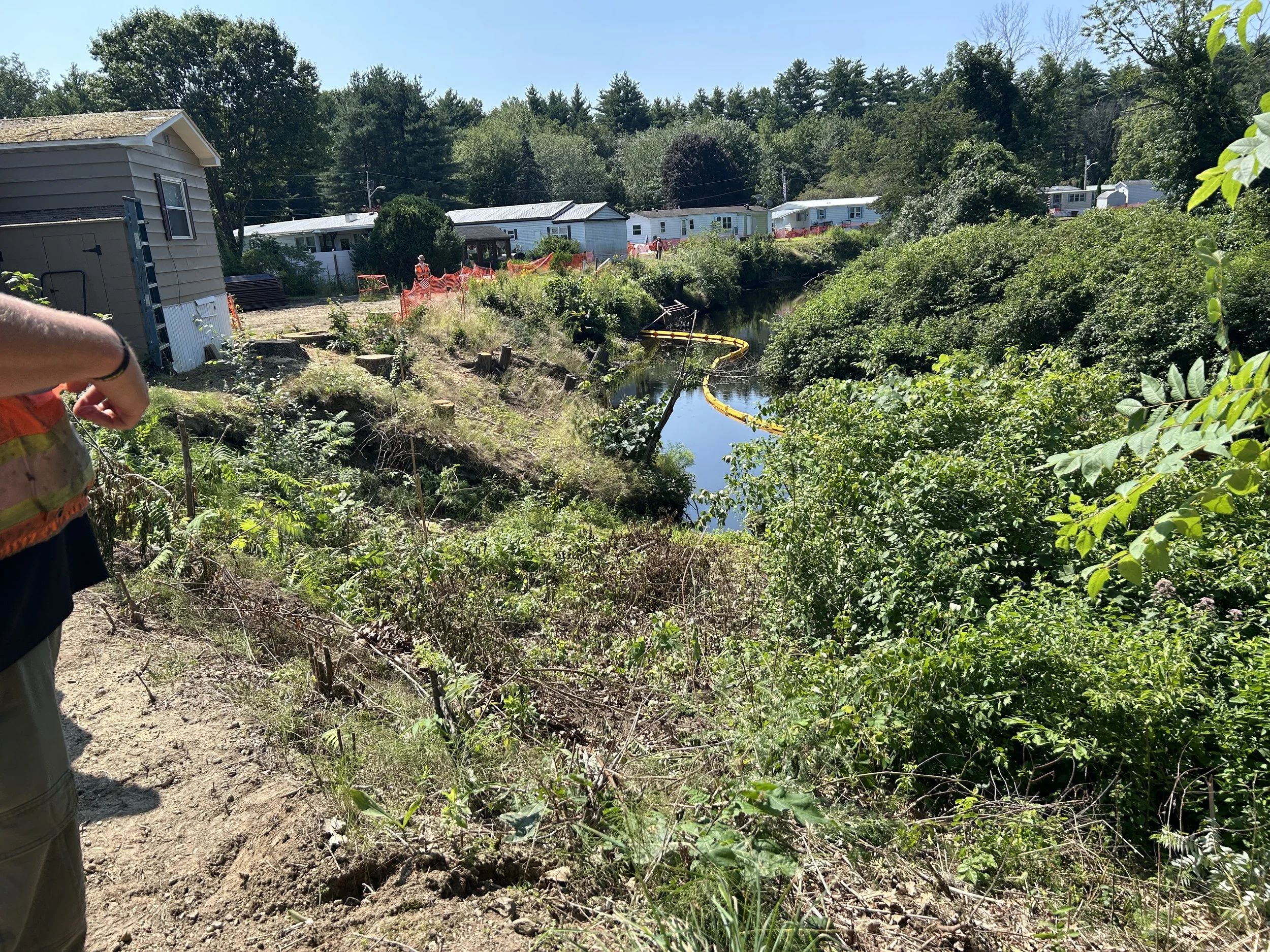
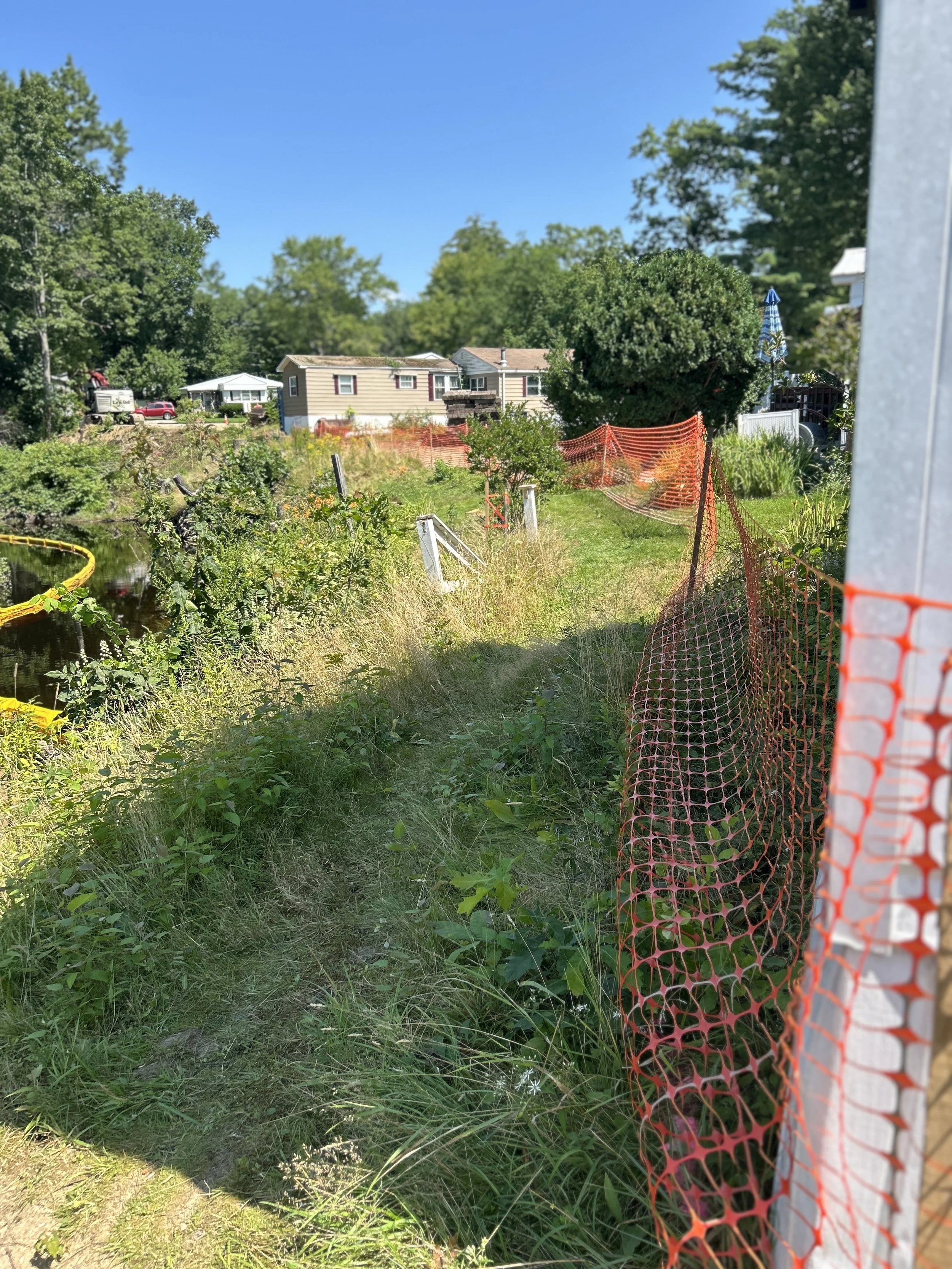
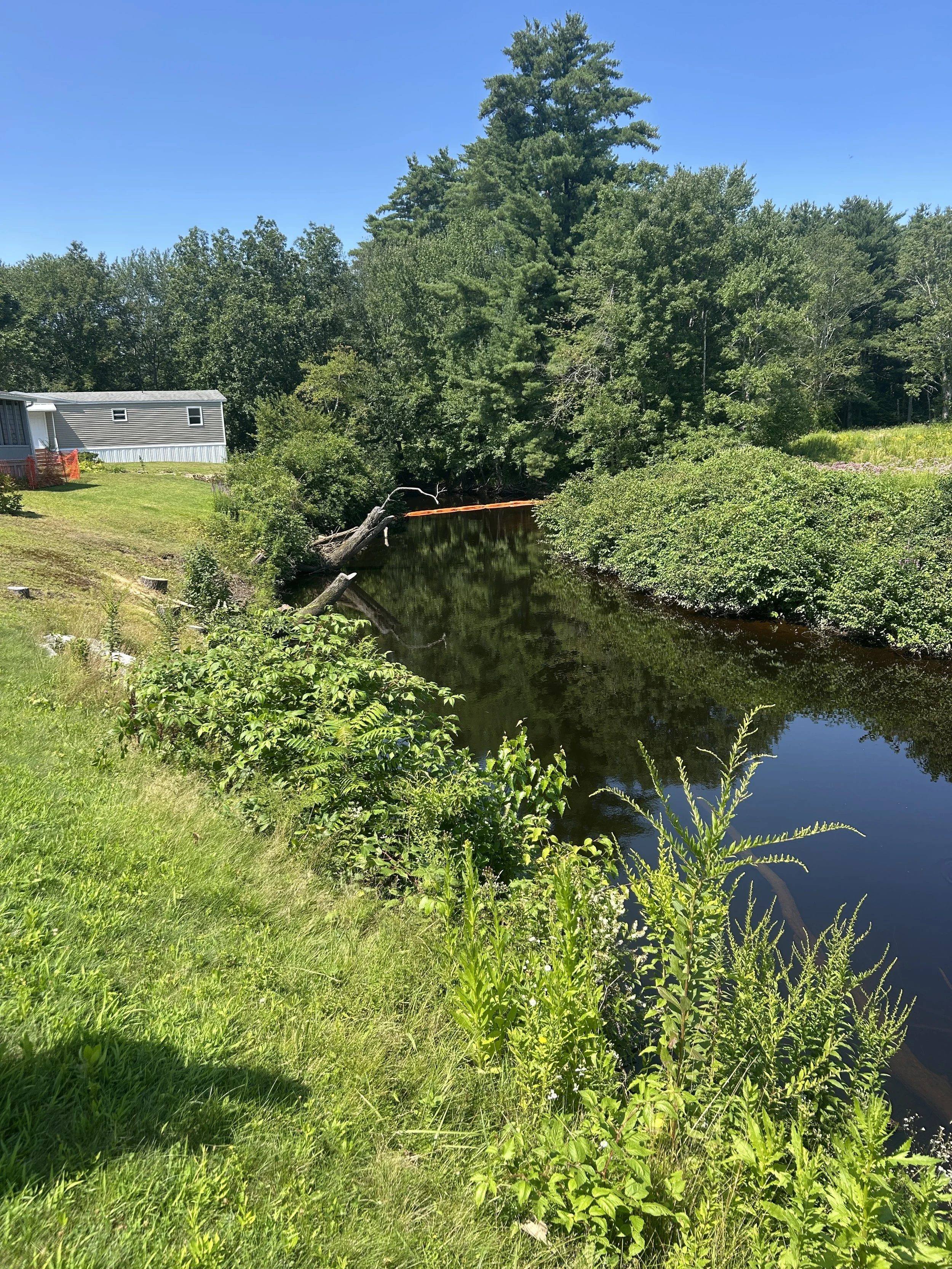
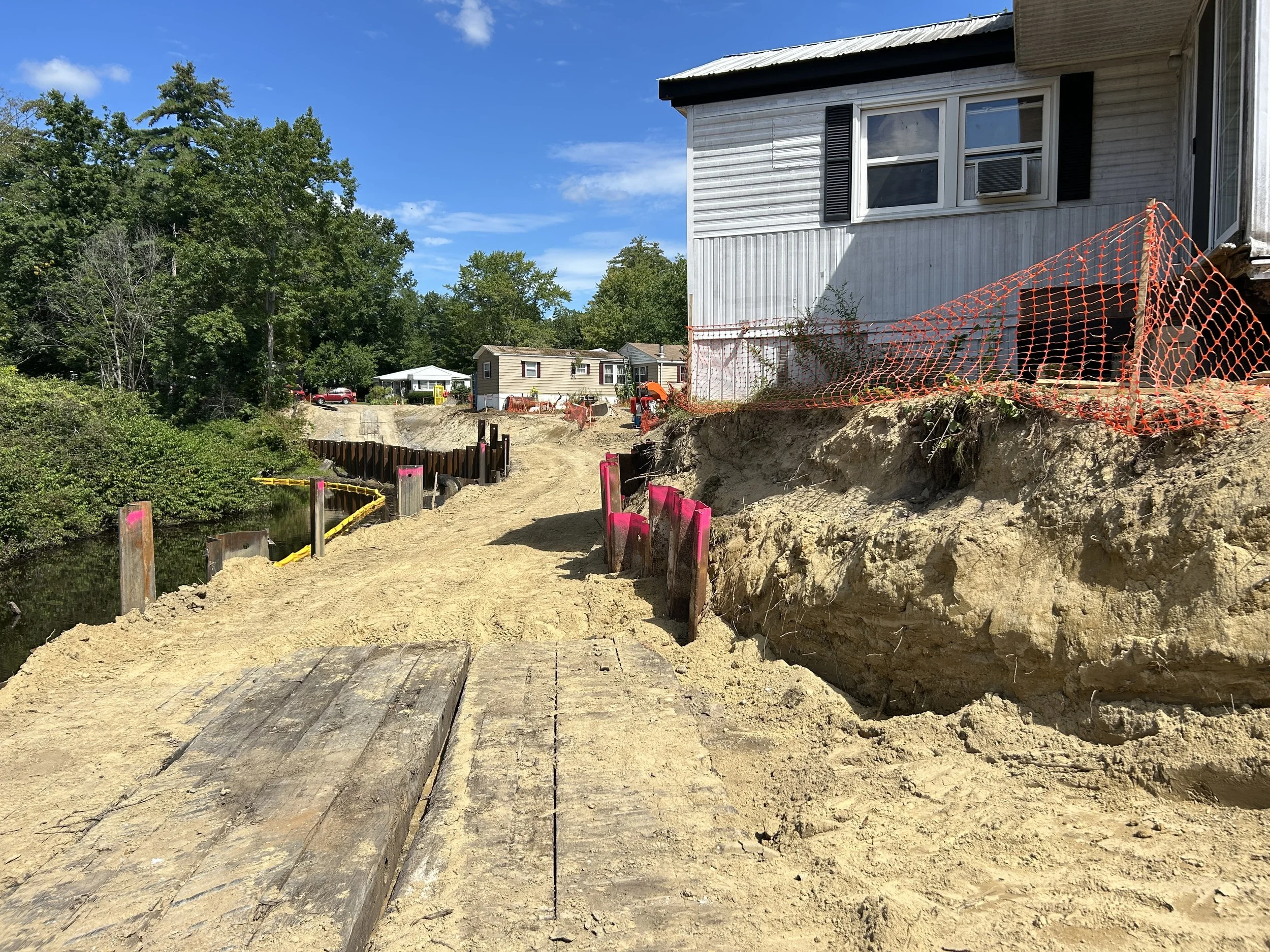
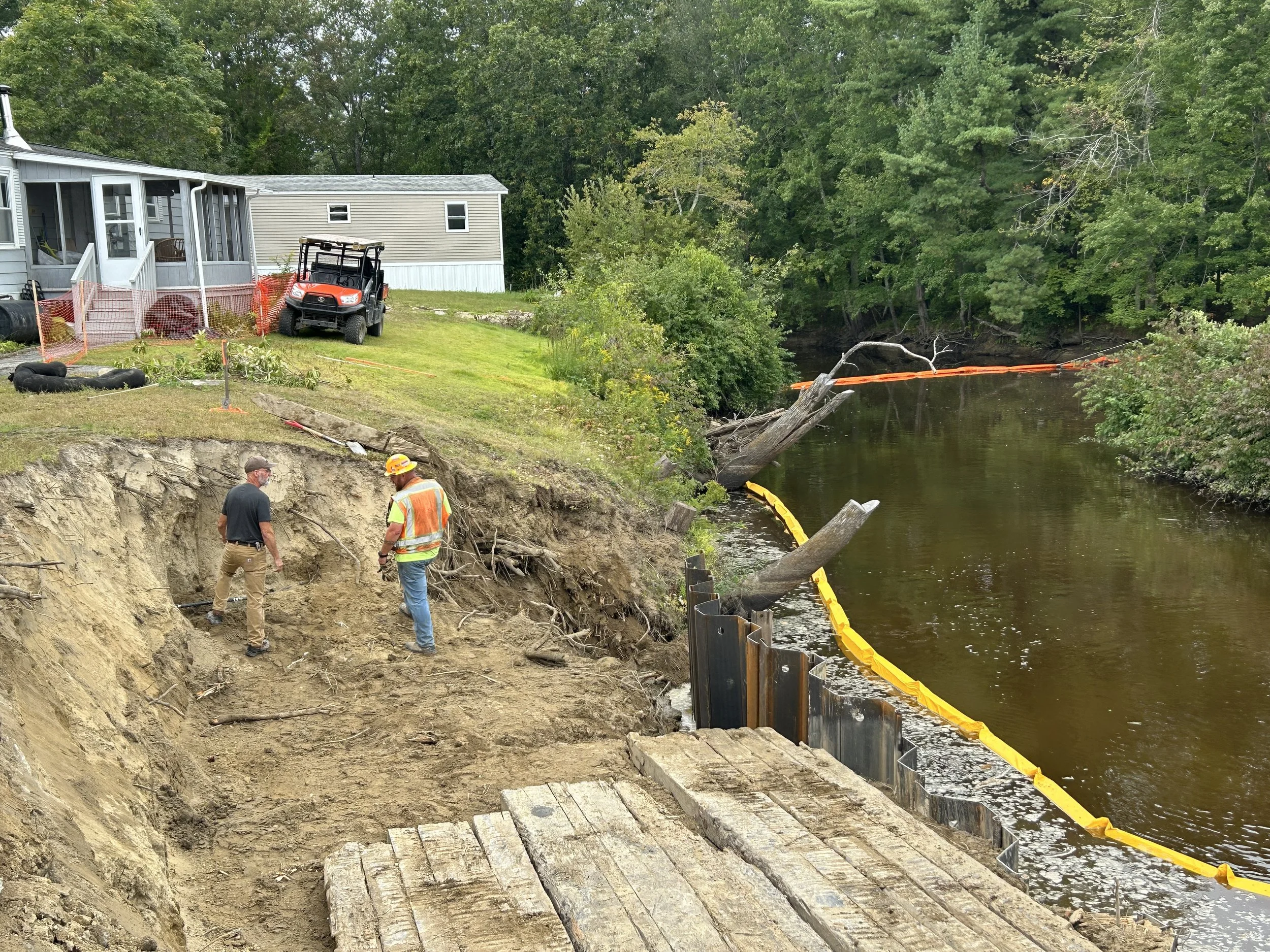
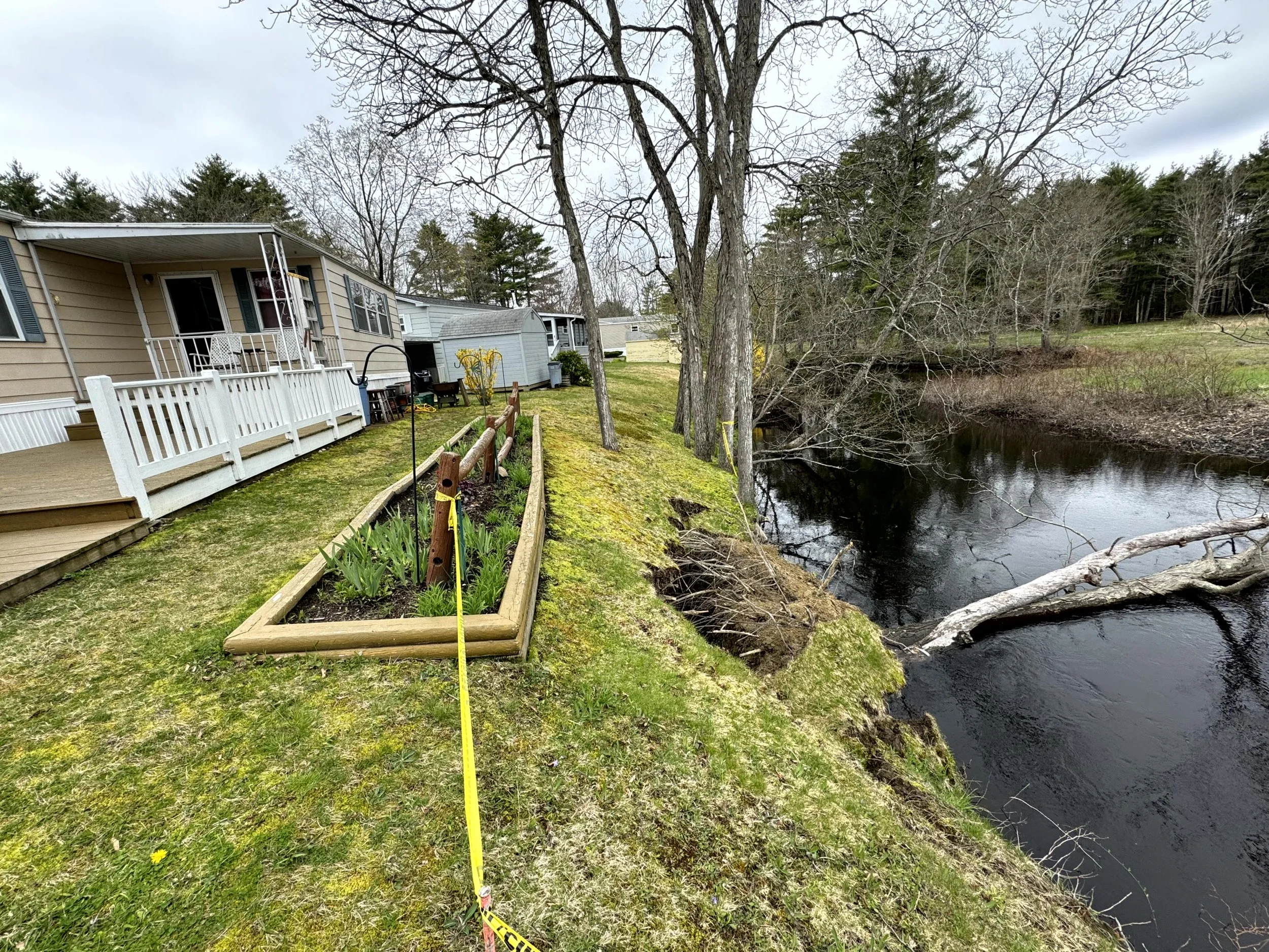
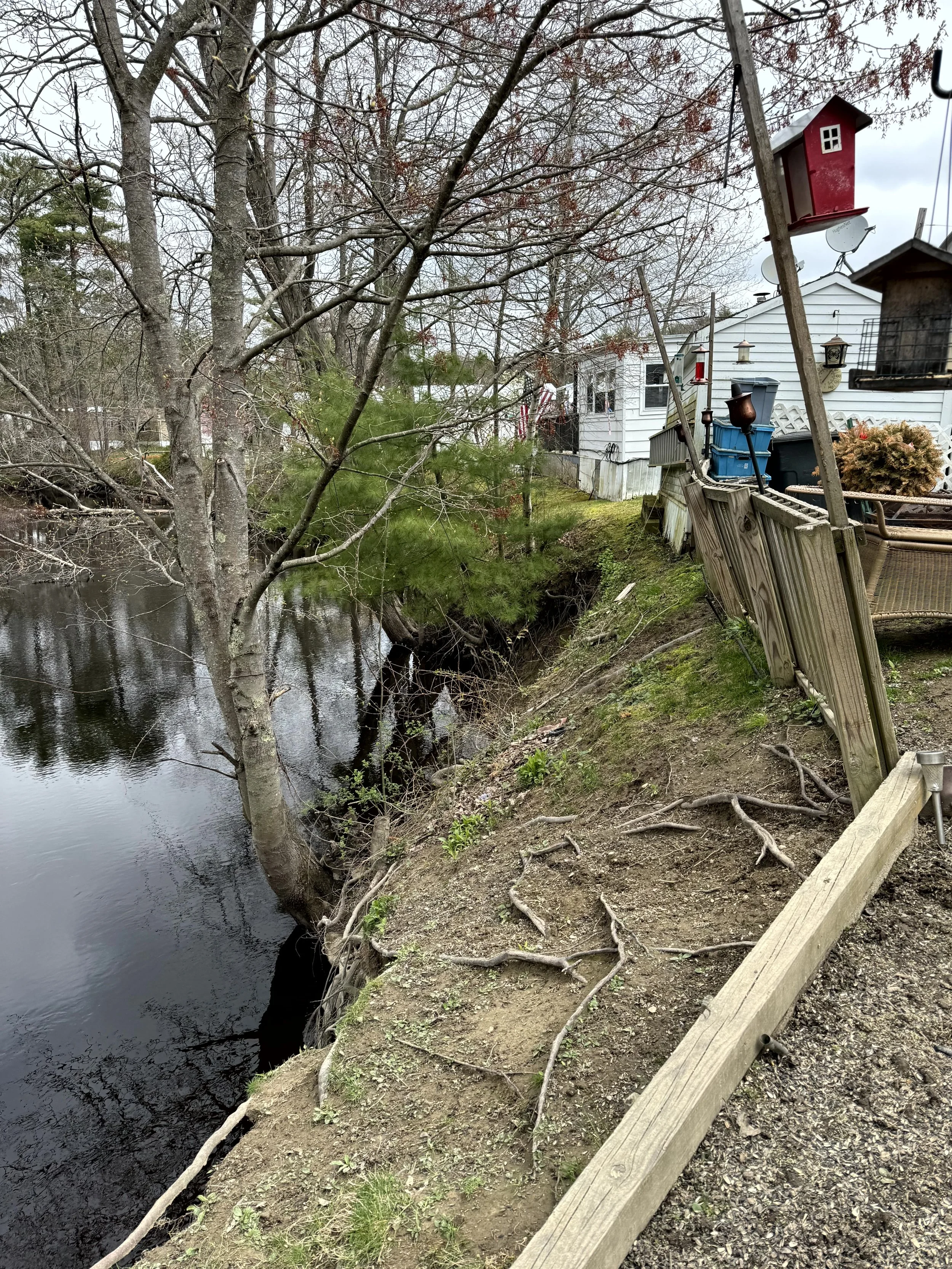
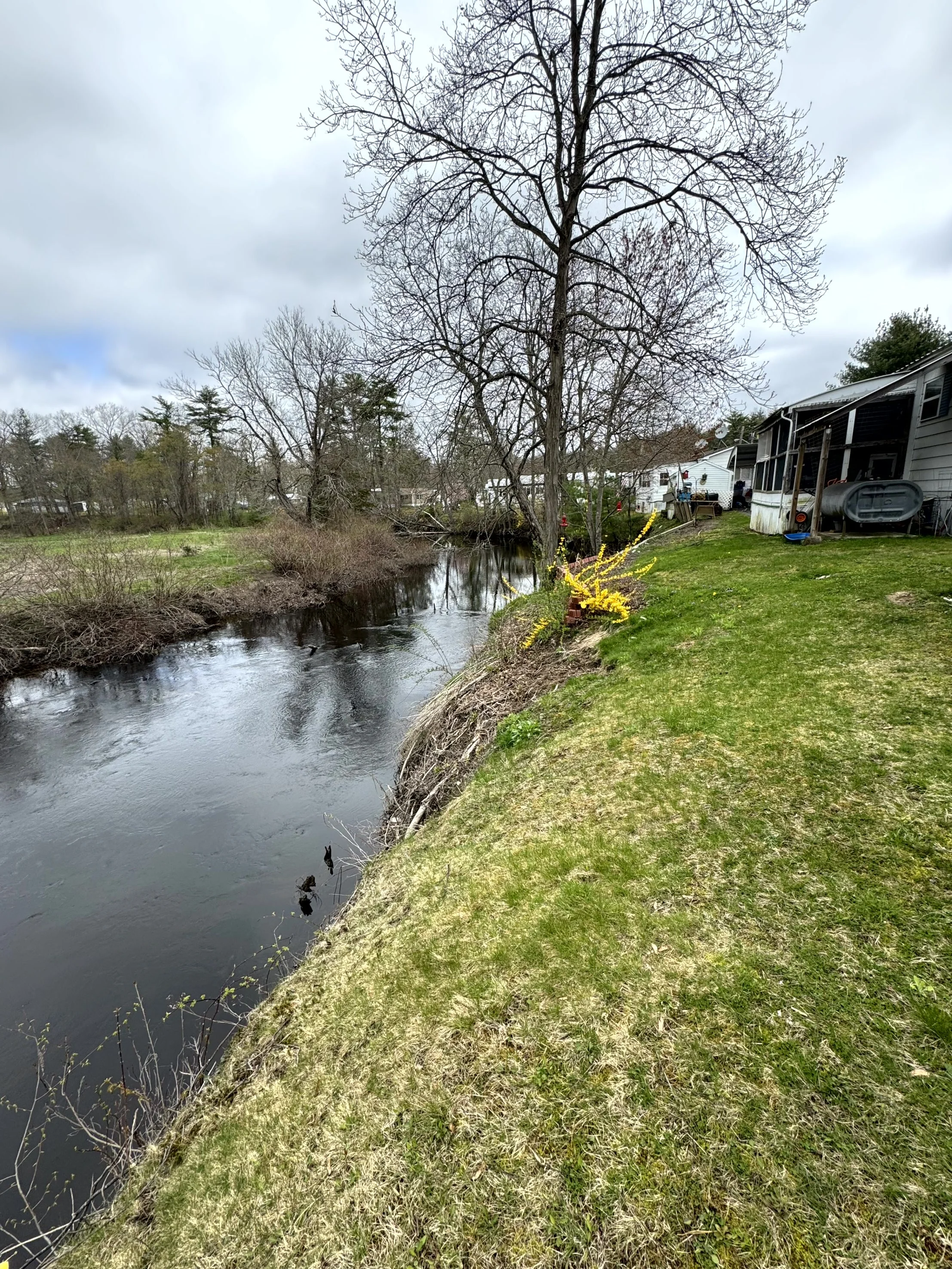
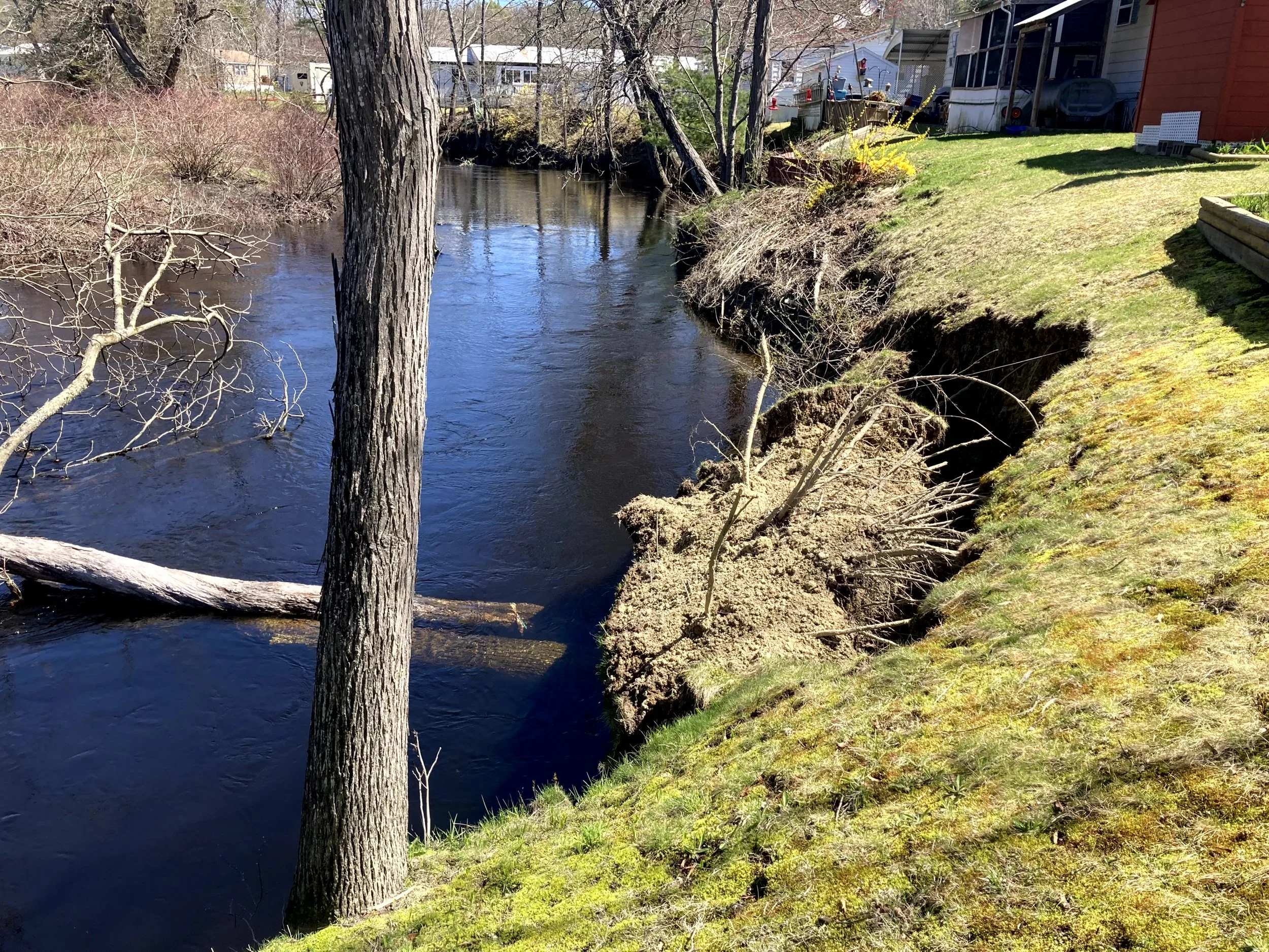
Years of riverbank erosion and stormwater runoff along the Exeter River Run community culminated in a major bank failure in April 2024, threatening water quality, aquatic habitat, and nearby residential properties. Developing a long-term solution presented unique challenges due to the close proximity of existing homes to the riverbank and the limited space available for traditional riverbank stabilization approaches.
The Rockingham County Conservation District (RCCD), in partnership with property owner Cobblestone II LEX LLC, and state, regional and local partners, worked to identify an approach that balanced structural stability with environmental protection. The resulting design incorporated PROPEX® Scourlok® Engineered Bank Stabilization System, an innovative solution that provides engineered bank support while allowing for the integration of native vegetation.
Restoration Approach
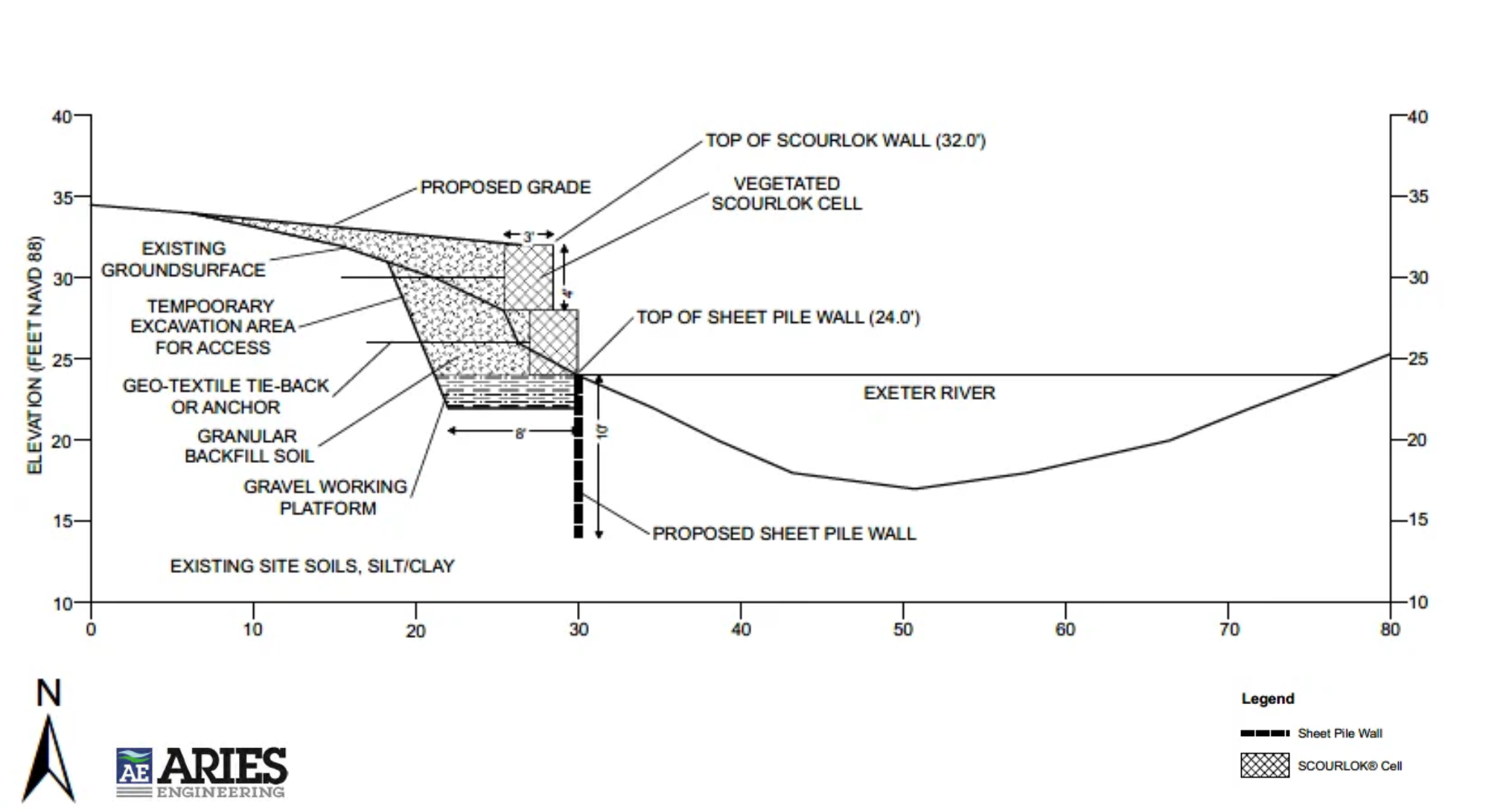
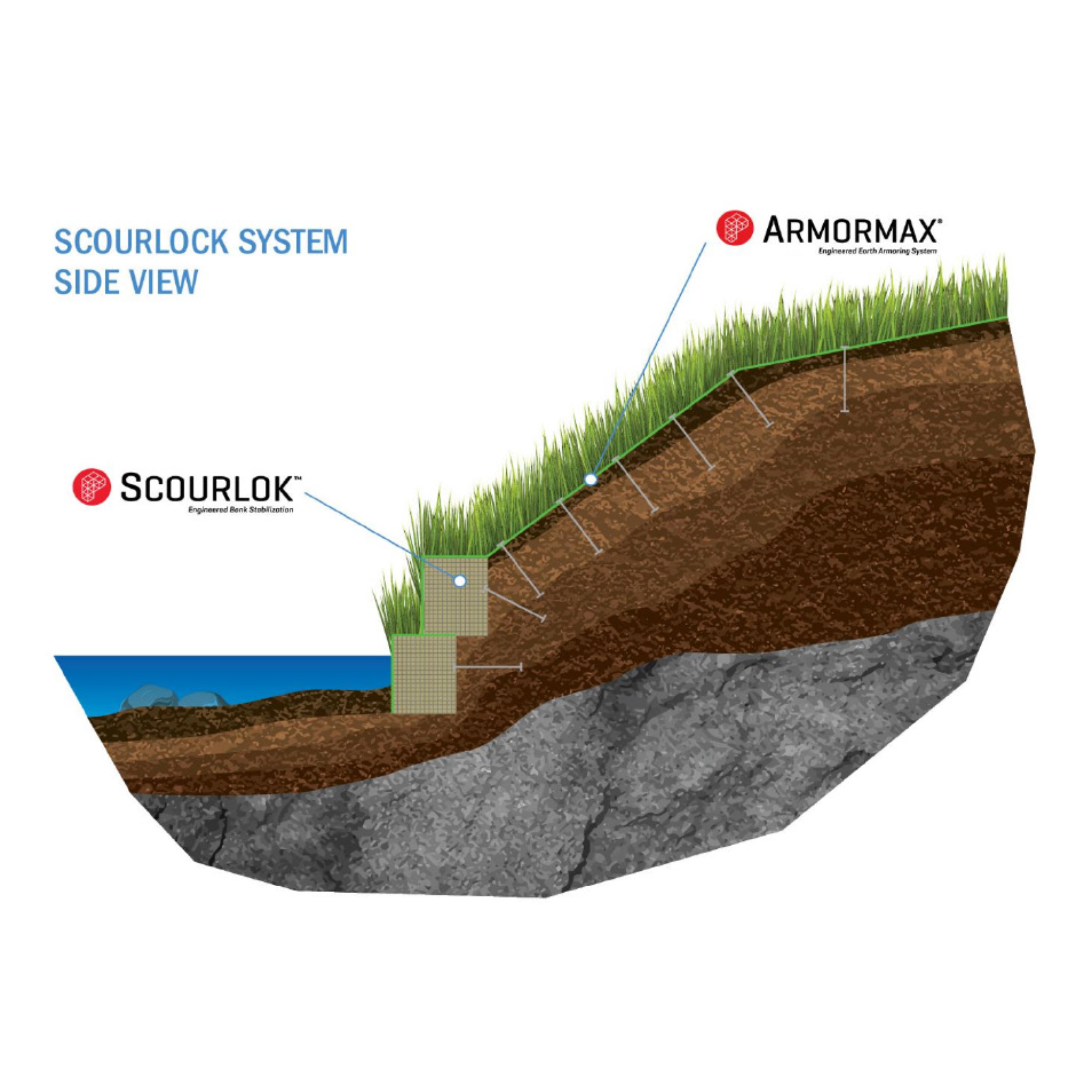
Typical Cross Section of Scourlok System- Diagram by Solmax
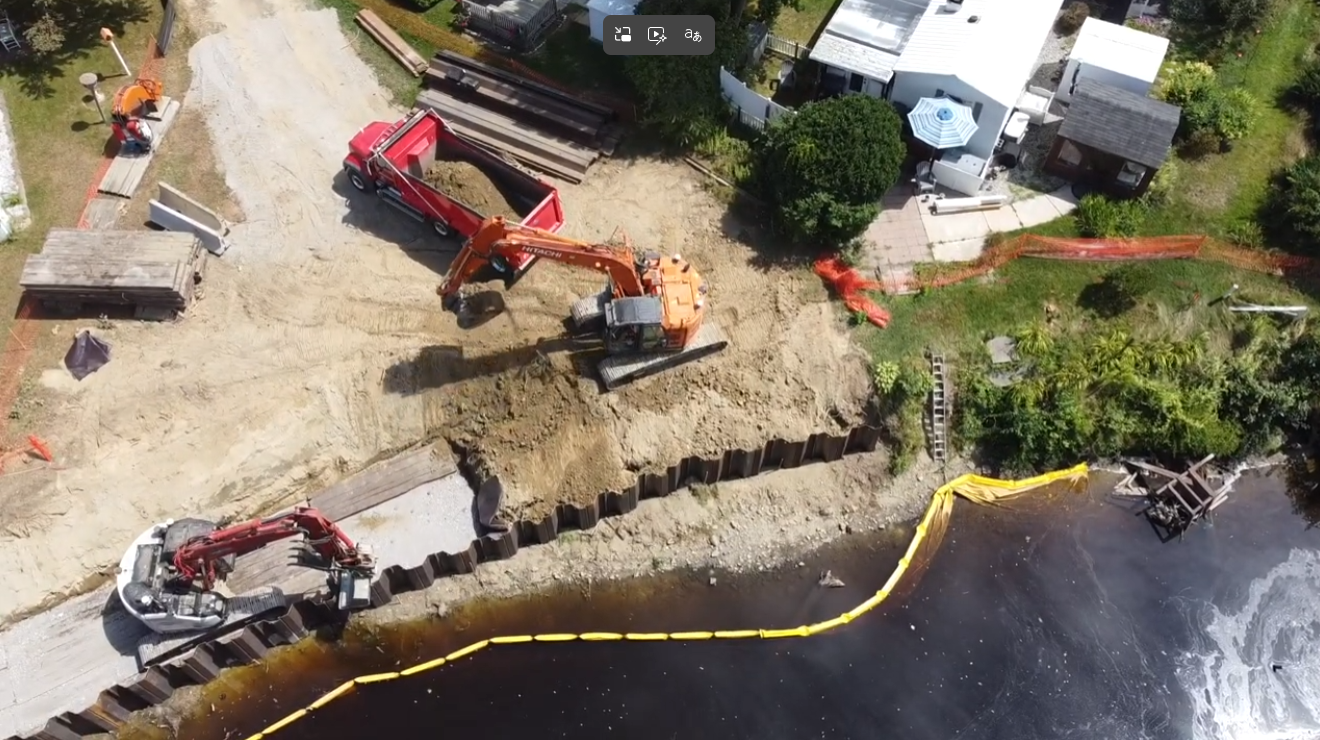
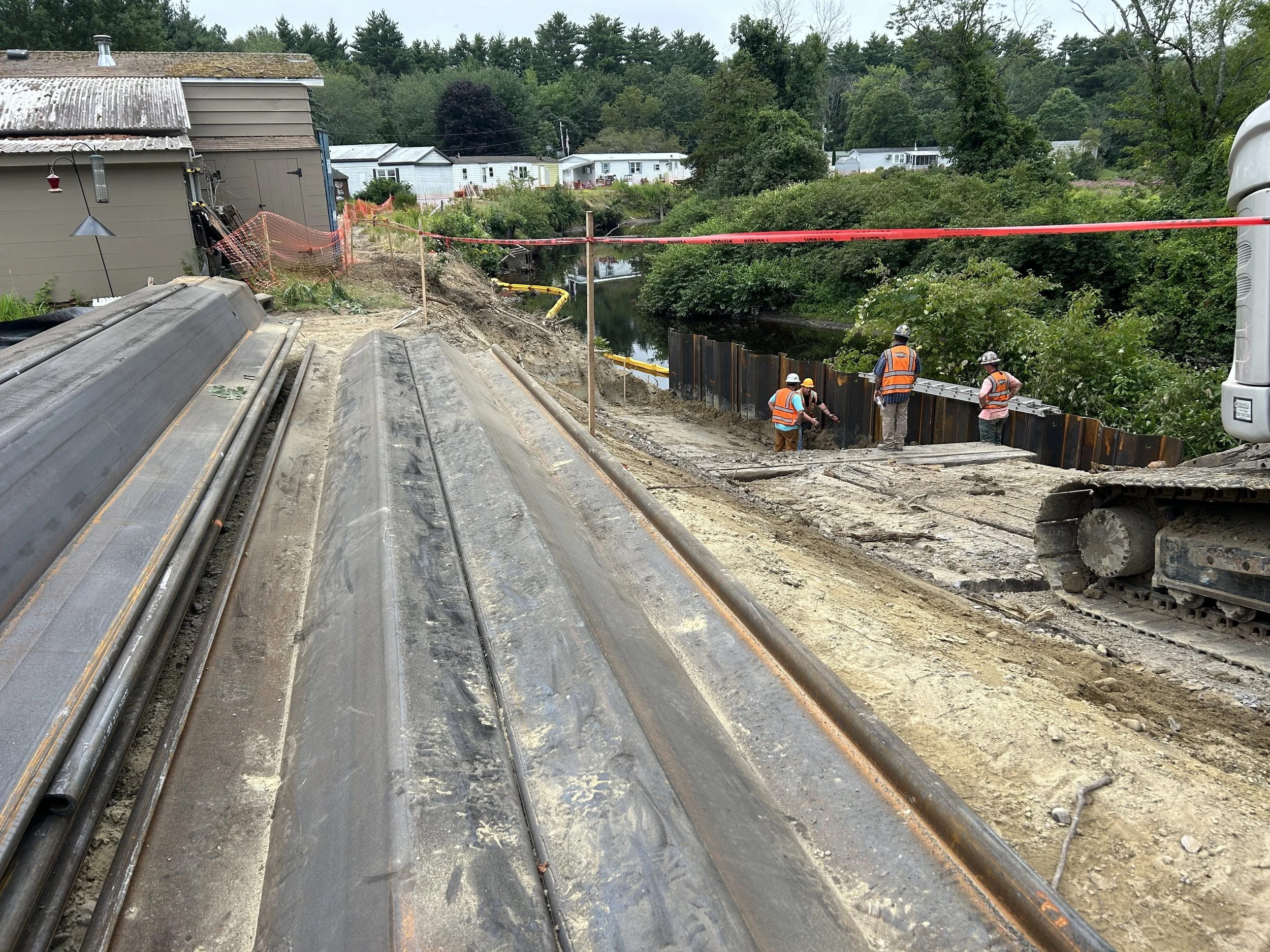
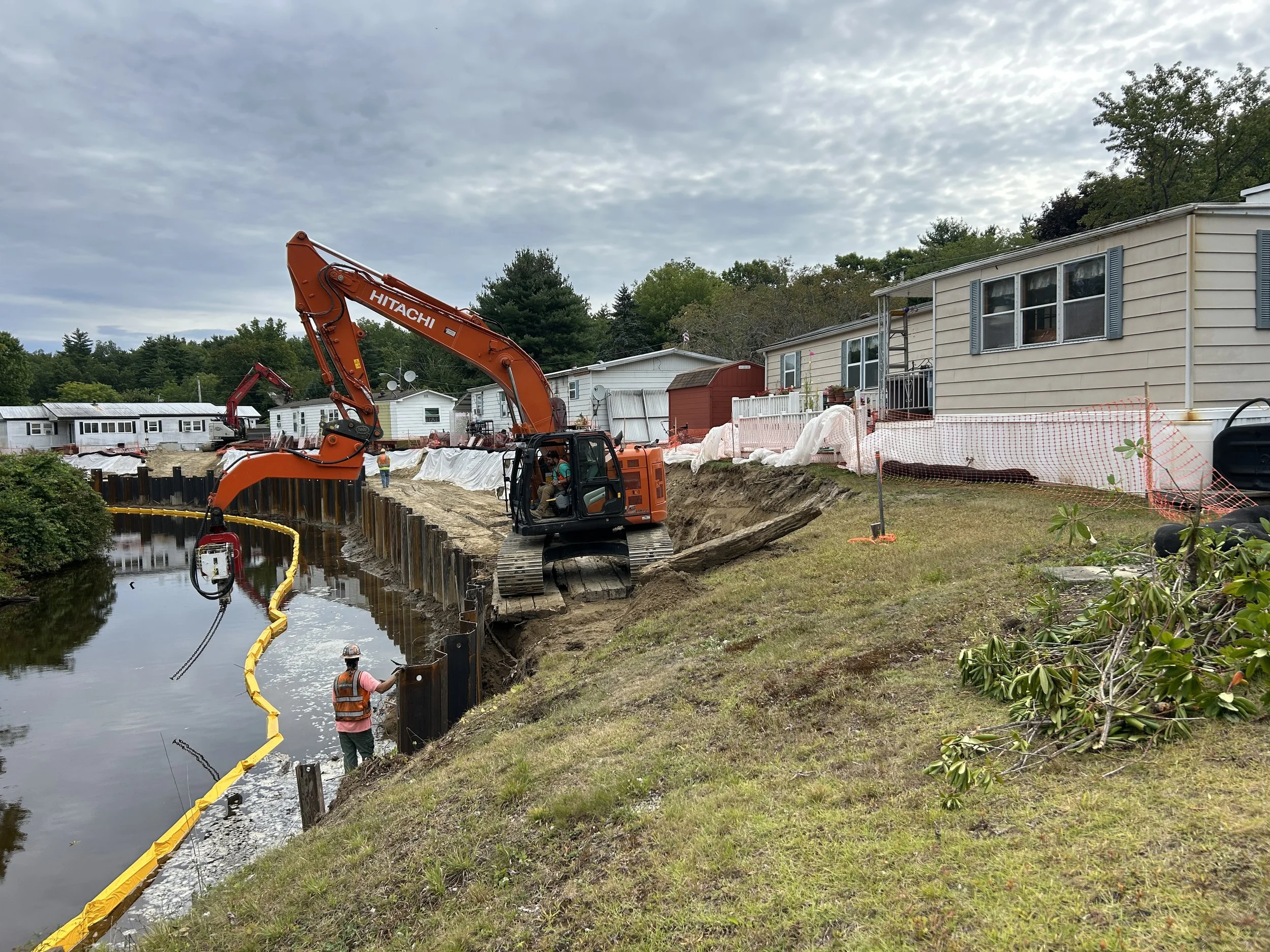
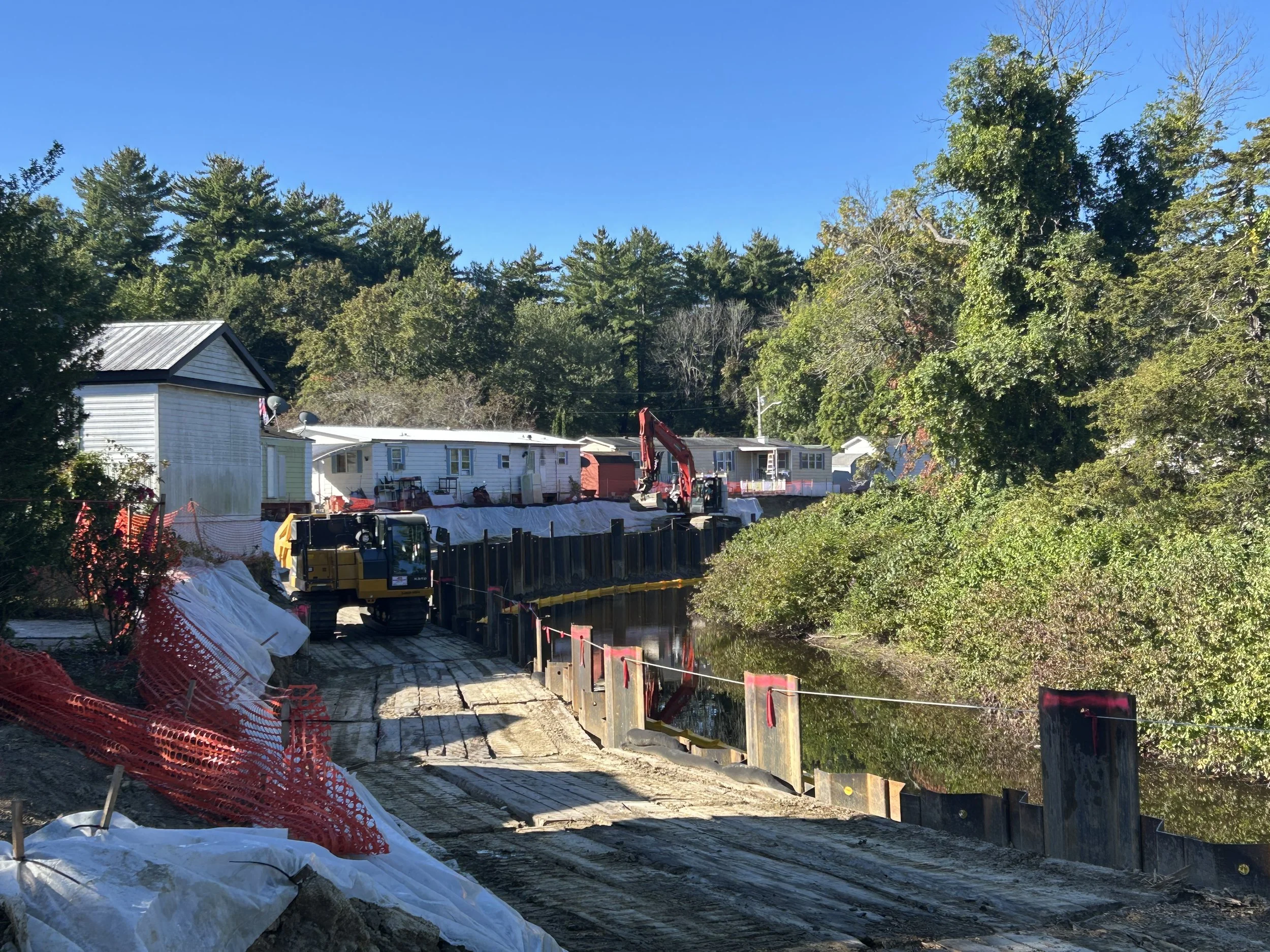
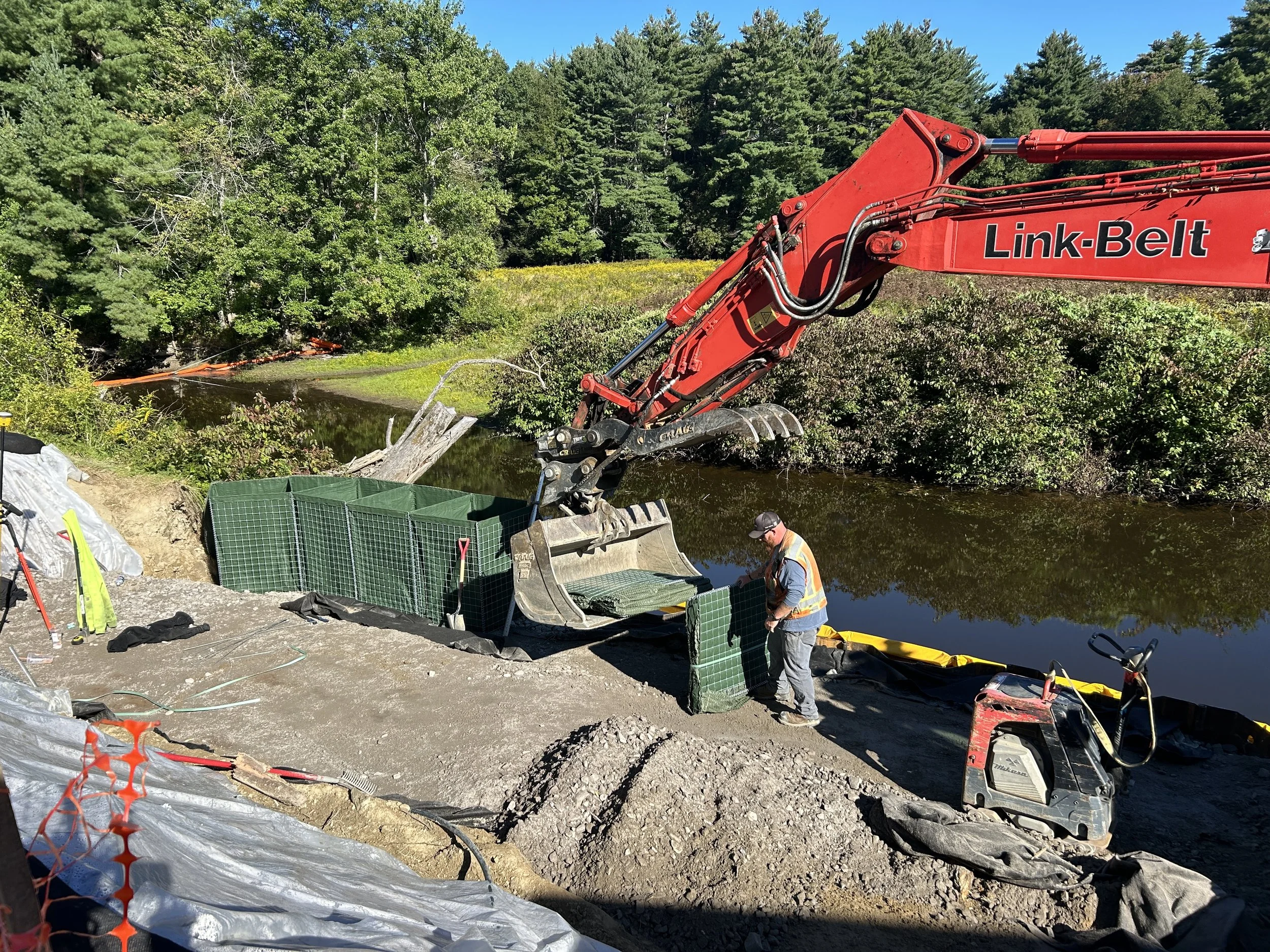
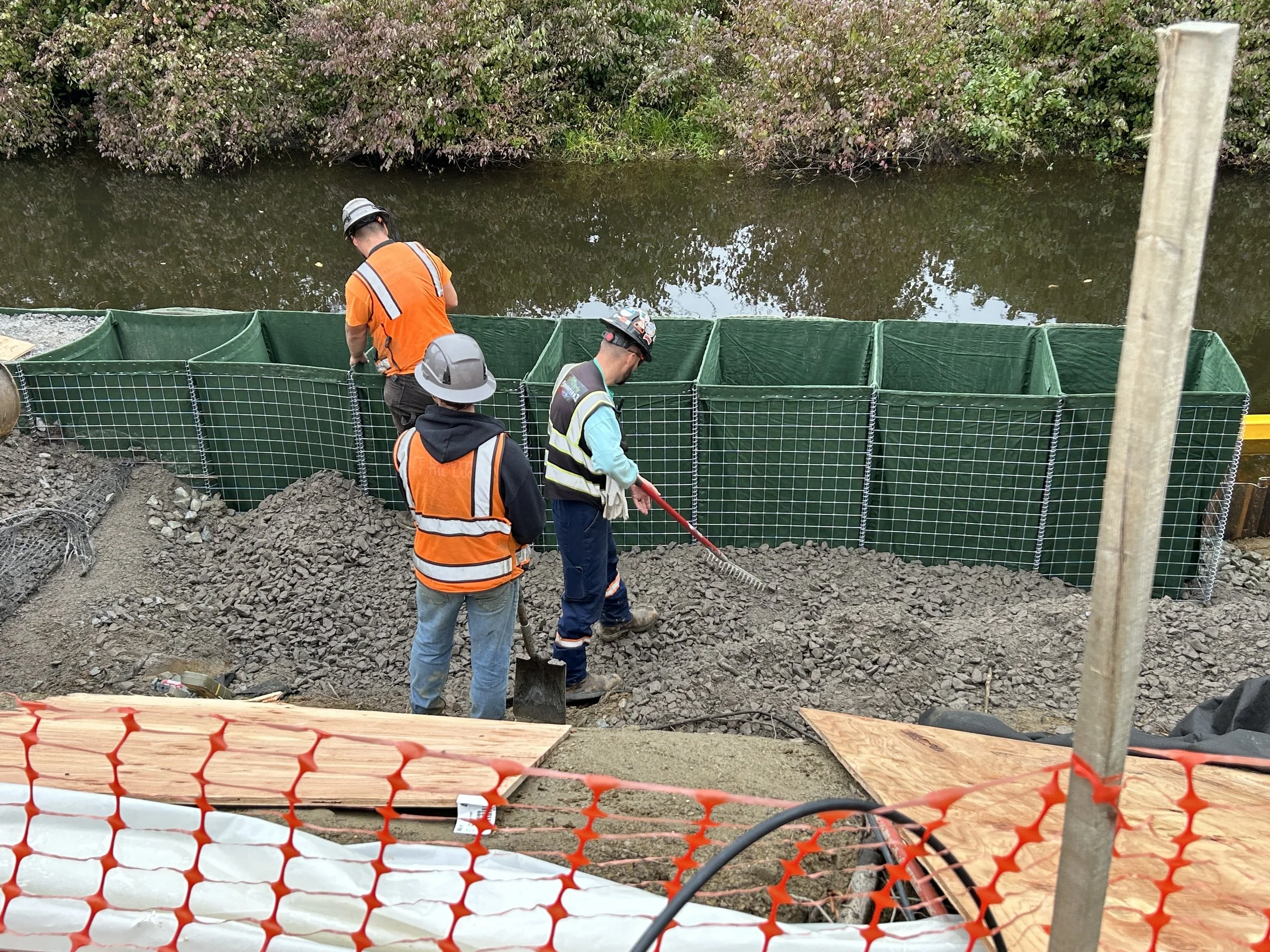
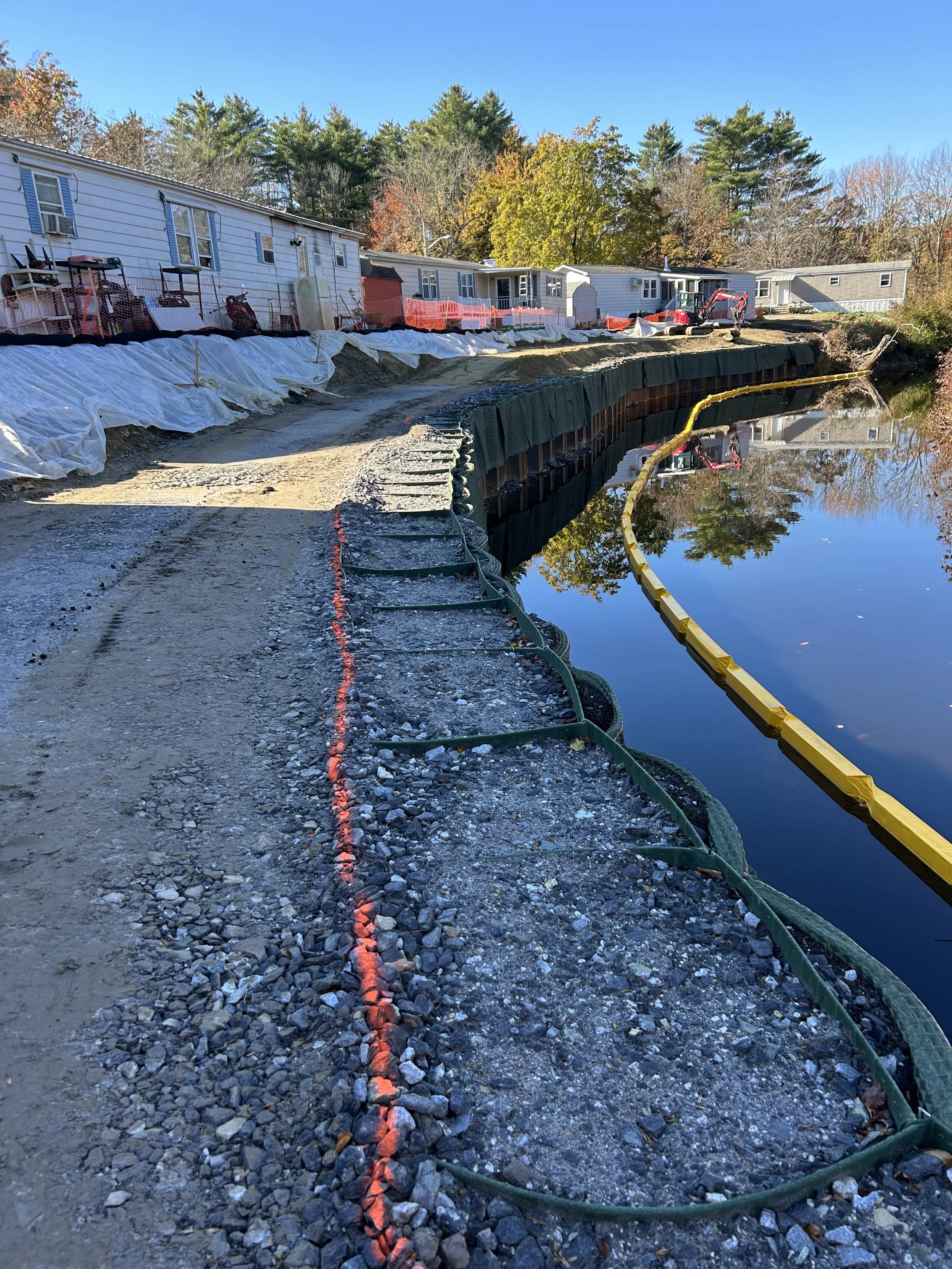
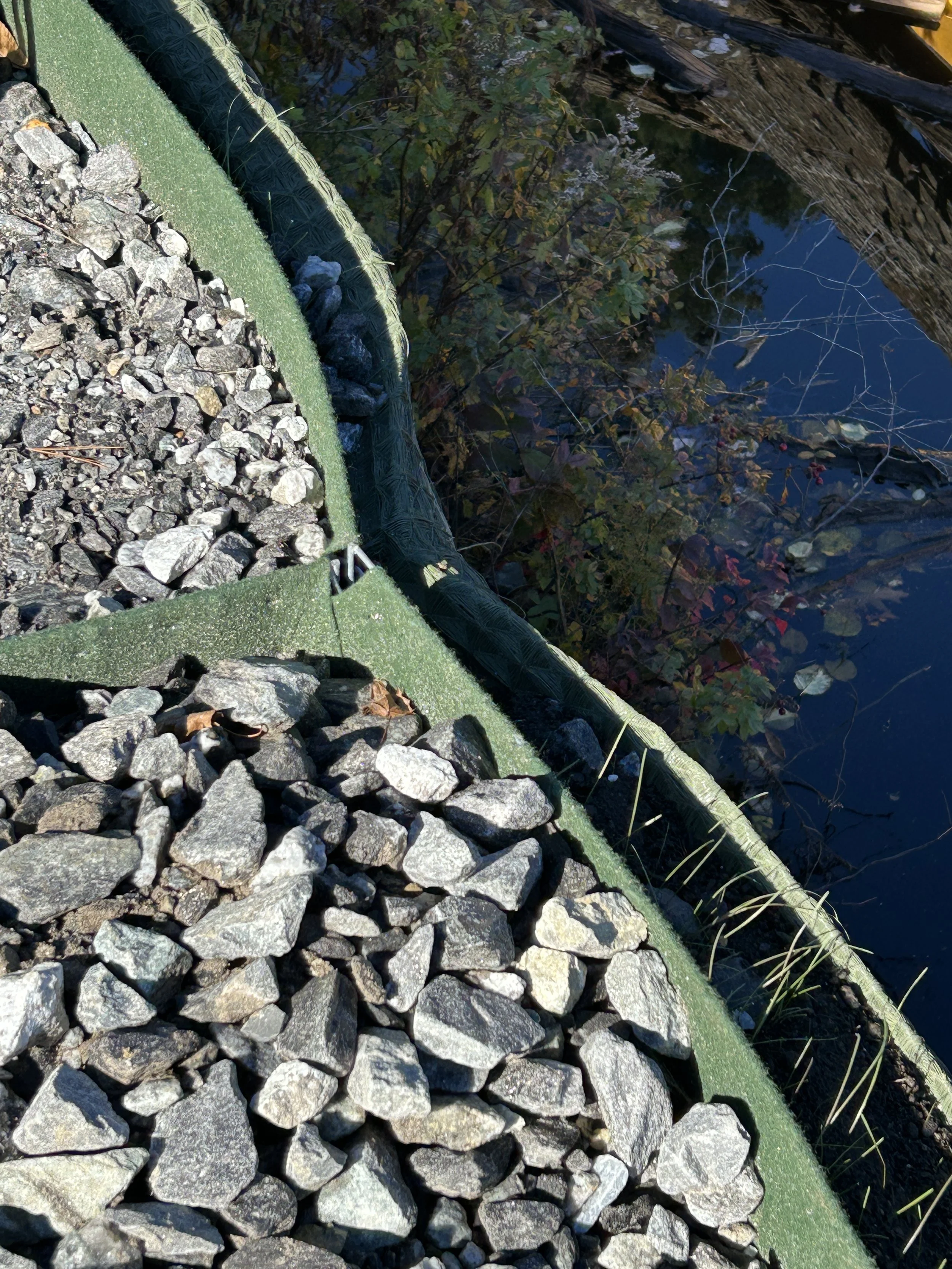
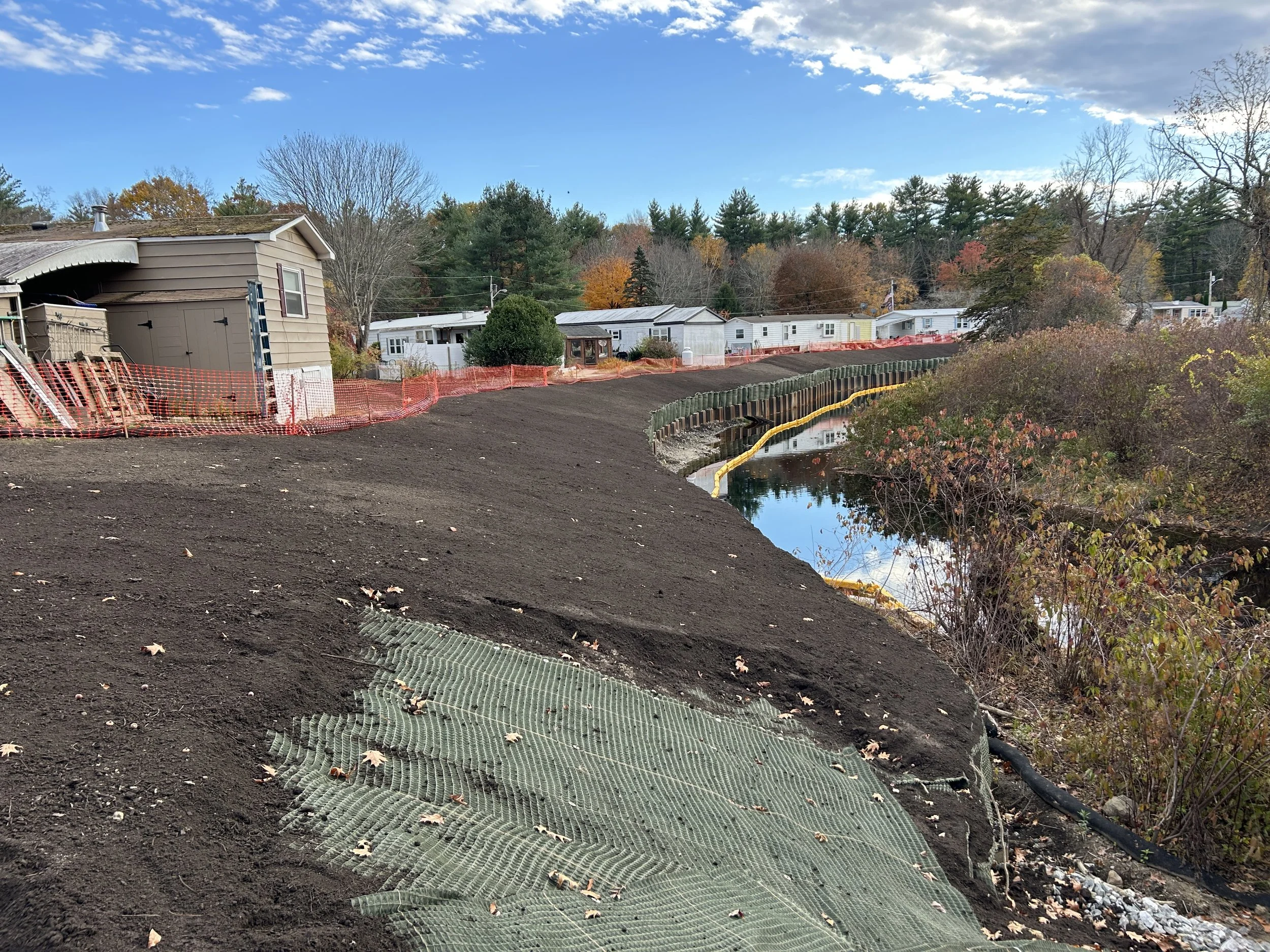
The project utilized the PROPEX® Scourlok® Engineered Bank Stabilization System, an engineered solution designed to stabilize eroding riverbanks while supporting the establishment of native vegetation. The system consists of interlocking structural baskets lined with geotextile fabric filled with rock and soil and reinforced with PROPEX® Pyramat® 75 High Performance Turf Reinforcement Mat. Steel sheet pile walls were also incorporated beneath the Scourlok baskets as part of the overall bank stabilization design. Together, these components provide an engineered approach to erosion protection while allowing native vegetation to establish, enhancing the vegetated buffer along the restored riverbank.
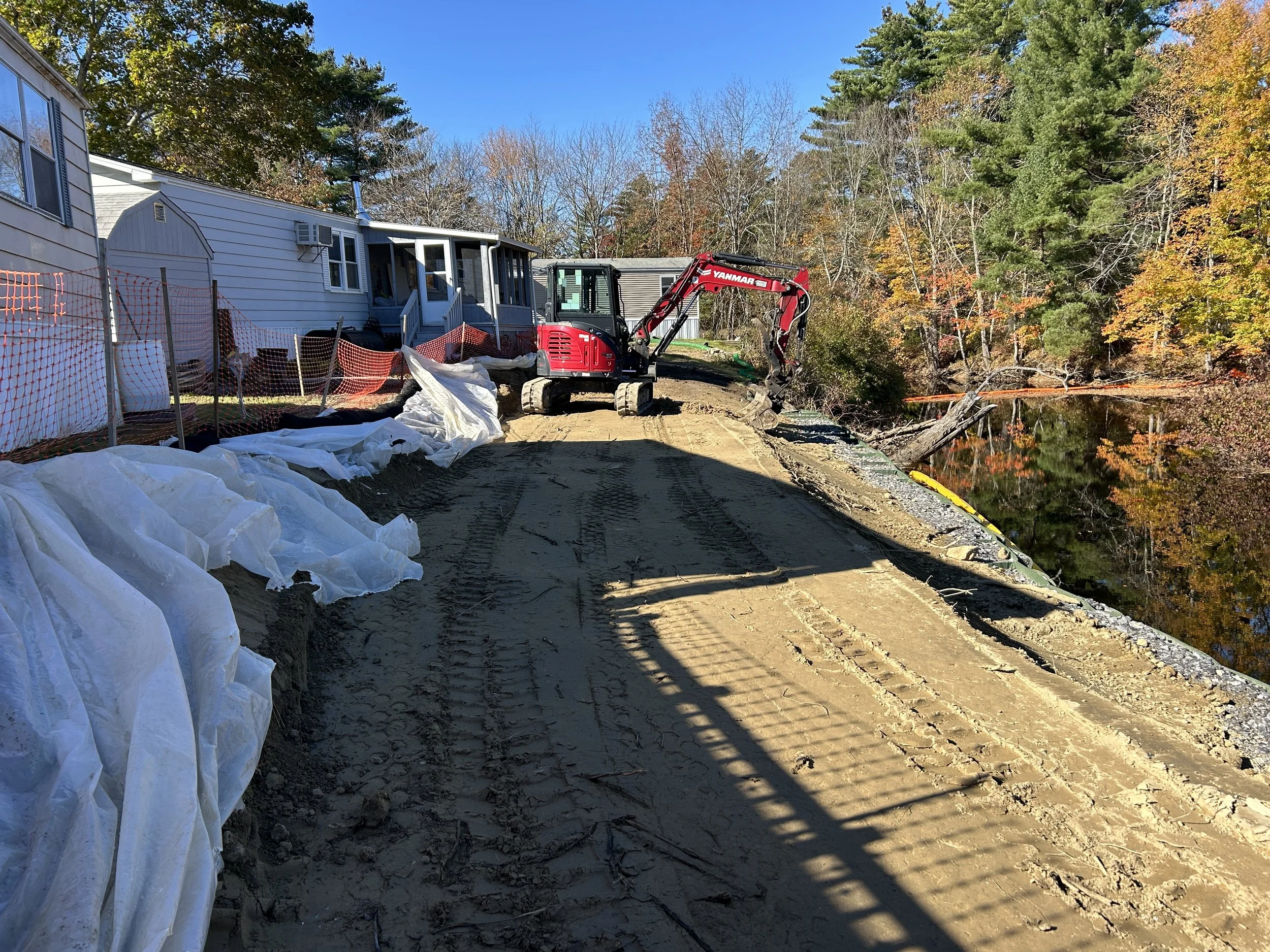
Construction began in August 2026, transforming the eroding riverbank through installation of the engineered stabilization system. Explore the project videos and photos below.
For a more detailed look at the project, restoration approach, and partnerships involved, see the full project write-up here.
Watch the restoration progress-videos by Western Skyline
Exeter Riverbank Restoration August 20, 2026
Exeter Riverbank Restoration September 16, 2026
Exeter Riverbank Restoration August 31, 2026
Exeter Riverbank Restoration October 7, 2026
Partnerships & Funding
Project Partners
The Exeter River Run Riverbank Restoration Project brought together the property owner, local and regional partners, and a team of engineering, construction, and environmental professionals. From initial planning and permitting through construction, each partner contributed valuable expertise and support to help move this complex restoration project forward.
RCCD is grateful for the collaboration, communication, and commitment of everyone involved, particularly the property owner, Cobblestone II LEX, LLC, and its on-the-ground facilities manager, whose support was instrumental throughout the project. The combined efforts of the project team helped navigate construction challenges and bring this innovative riverbank restoration to completion.
Funding
Project funding was provided in part by the New Hampshire Department of Environmental Services through a Watershed Assistance Grant supported by Clean Water Act Section 319 funds from the U.S. Environmental Protection Agency, and by the New Hampshire Charitable Foundation's Great Bay 2030 Initiative. The project also received significant financial support from the landowner, Cobblestone II LEX, LLC.





What’s Next
With construction substantially complete, the next phase of the project will focus on establishing a native vegetated riverbank. Dormant hydroseeding completed in November 2026 is expected to support the regeneration of native grasses and wetland plants, with additional native plantings planned for spring 2027. RCCD will assess the bank's vegetation as it establishes and determine whether additional planting is needed in fall 2027.
There will also be opportunities to learn more about the project, including its engineering and construction considerations, and to get involved in upcoming planting efforts. Keep an eye out for future volunteer events and project updates!
Explore Project Photos