

Fairhill Saltmarsh Collaborative Restoration Project
Why Restore Fairhill Salt Marsh?
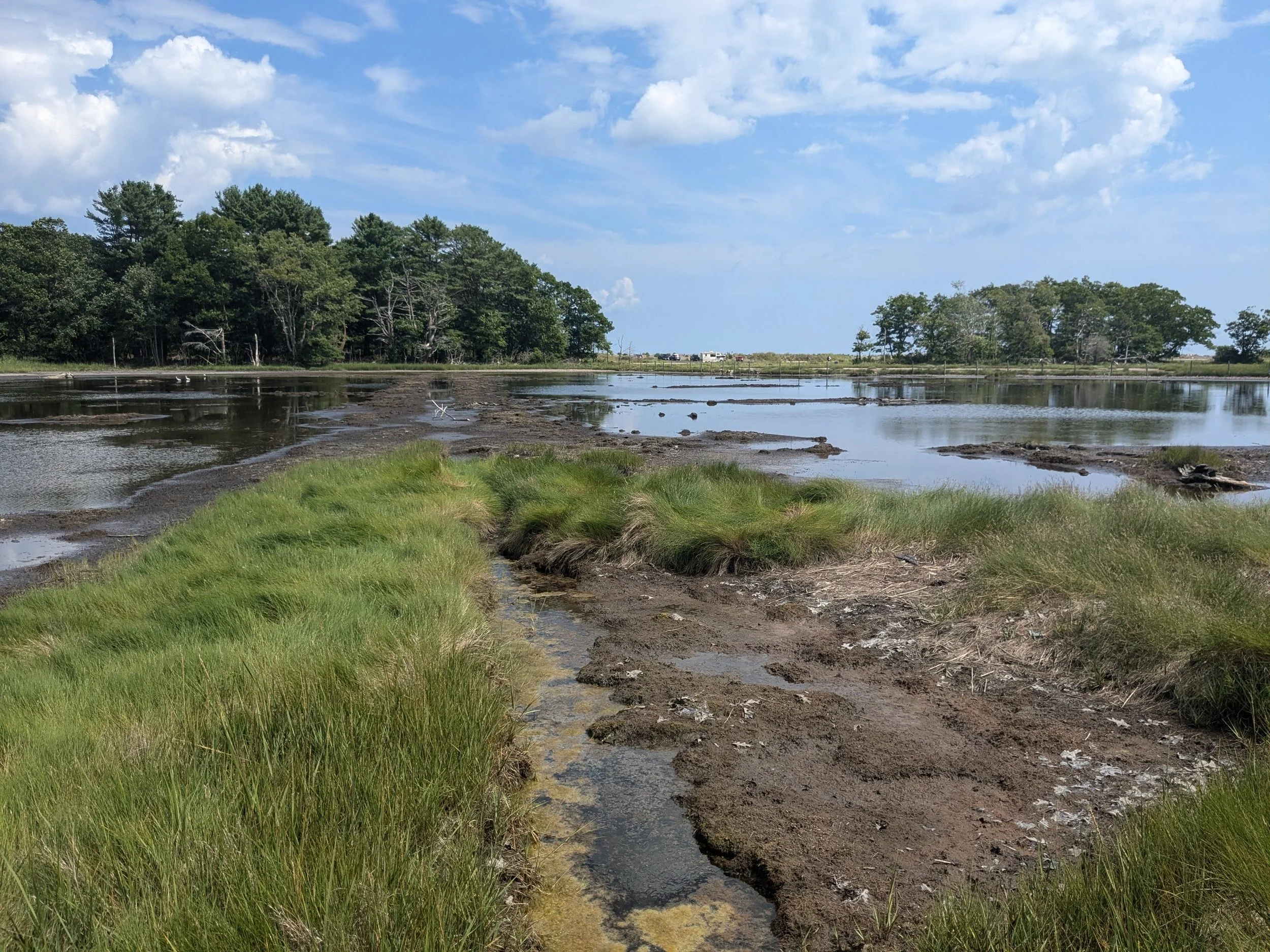
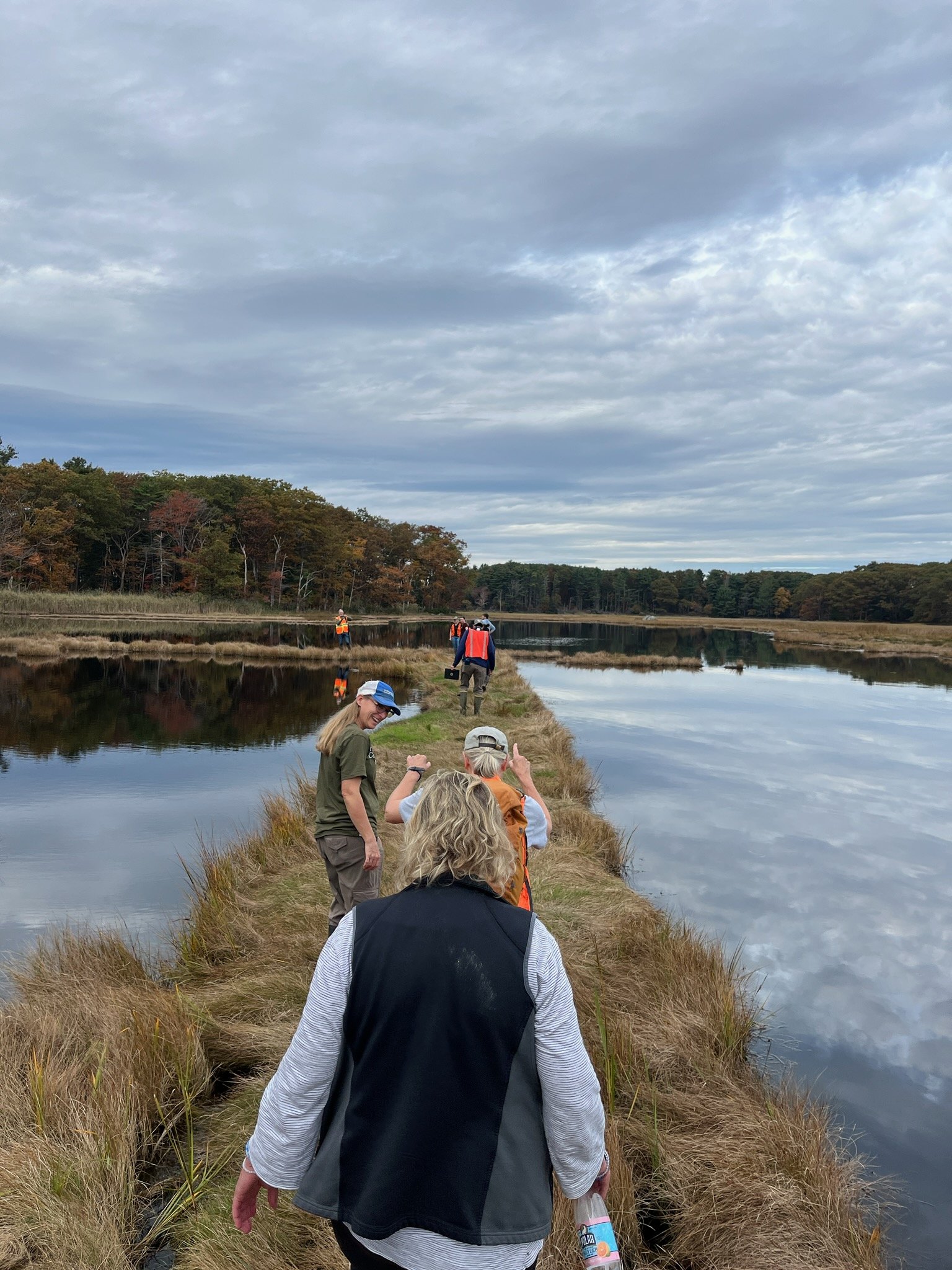
Fairhill Salt Marsh is one of New Hampshire's most resilient salt marshes, but like many coastal marshes throughout the region, its condition has gradually declined. Historic farming practices, mosquito-control efforts, and rising sea levels have altered the marsh's natural tidal flow, leaving too much standing water on the marsh surface.
Prolonged flooding reduces native marsh vegetation, expands areas of open water, and degrades important habitat for fish and wildlife, including the threatened Saltmarsh Sparrow. As sea levels continue to rise, restoring the marsh's natural hydrology will help improve its long-term health and resilience.
From Planning to Restoration
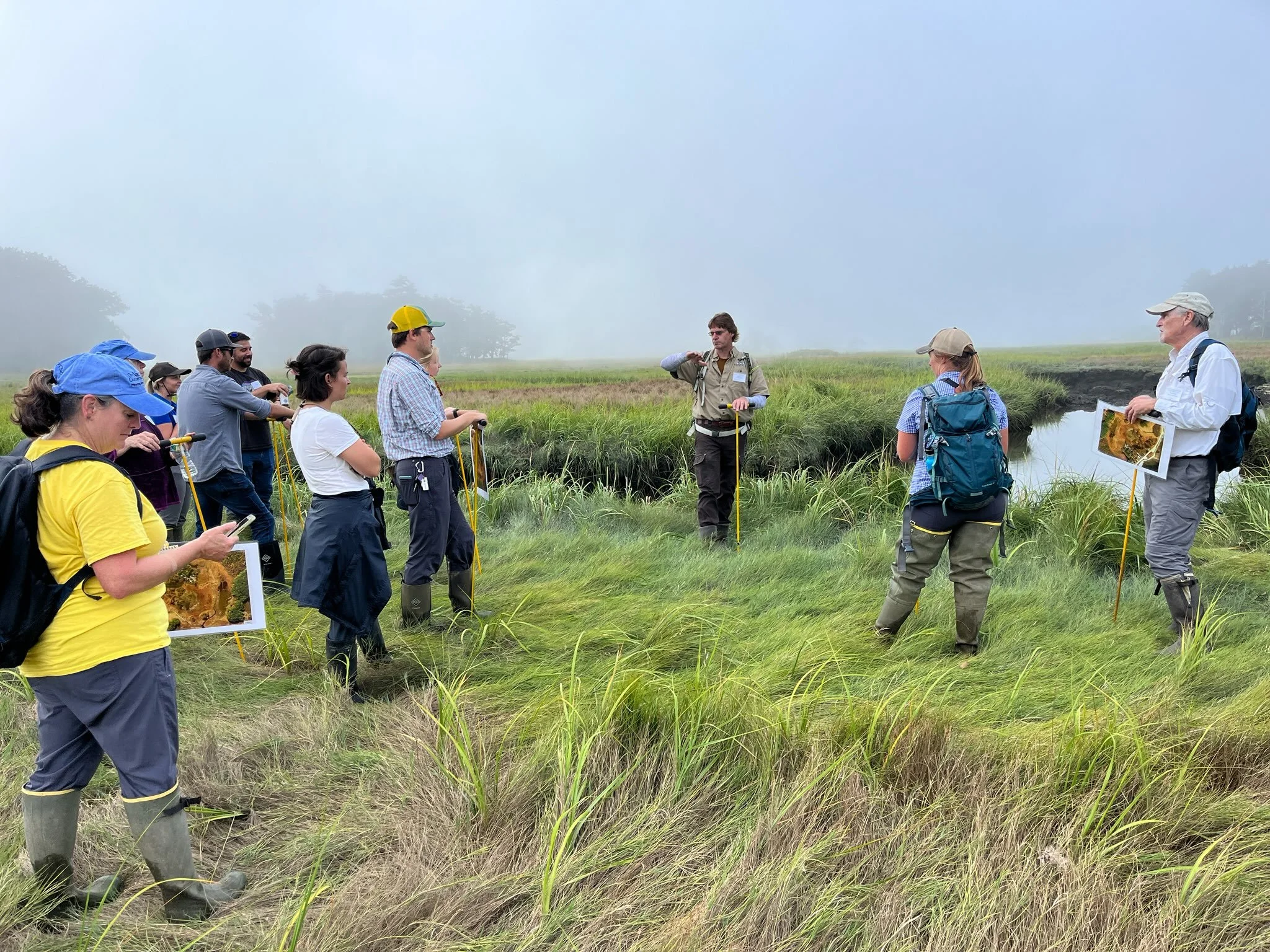
Since 2023, the Rockingham County Conservation District (RCCD) and the New Hampshire Department of Environmental Services (NHDES) Coastal Program Program have worked with landowners in Rye, including the Town of Rye (through the Rye Conservation Commission (RCC)), and the State of NH (through the Department of Natural and Cultural Resources (DNCR)) as well as salt marsh experts, agency partners, and local stakeholders to better understand the historic alterations affecting the health of Fairhill Salt Marsh, and to identify possible low-tech, nature-based restoration opportunities.
This work included evaluating the marsh's hydrology, previous mosquito management pools, historic agricultural features (i.e., berms, dams, roads, channels), tidal restrictions, vegetation cover change, water levels, and anticipated sea level rise. Throughout the project, community members and nearby residents also shared observations about changes they have witnessed over time, concerns they have for the marsh, and priorities for protecting its natural resources.
This collaborative effort produced the Fairhill Marsh Collaborative Preliminary Restoration Design, which outlines nature-based strategies to restore healthier marsh conditions.
View the Preliminary Restoration Design Report and explore the StoryMap
Building on the preliminary restoration design, the Fairhill Salt Marsh Restoration Project is now advancing through permitting, final design plan refinement, and implementation planning. The project will use nature-based restoration techniques to improve tidal flow, restore healthier marsh vegetation and overall habitat conditions, and strengthen the marsh's ability to adapt to rising sea levels.
The goal is not to recreate the marsh as it once existed, but to improve its long-term health and resilience so it can continue providing important benefits, including:
Habitat for fish and wildlife, including the threatened Saltmarsh Sparrow
Natural flood buffering during normal tidal conditions
Greater abundance and vitality of saltmarsh vegetation
Reduced extent of open water bodies
Improved water quality
Carbon storage
Greater resilience to sea level rise

Planned Restoration Activities
The project uses low-impact restoration methods designed to work with the marsh's natural processes, including:
Restoring natural drainage by reconnecting tidal channels and creating shallow runnels where water has become trapped.
Filling selected historic agricultural ditches with native marsh material to restore more natural water movement.
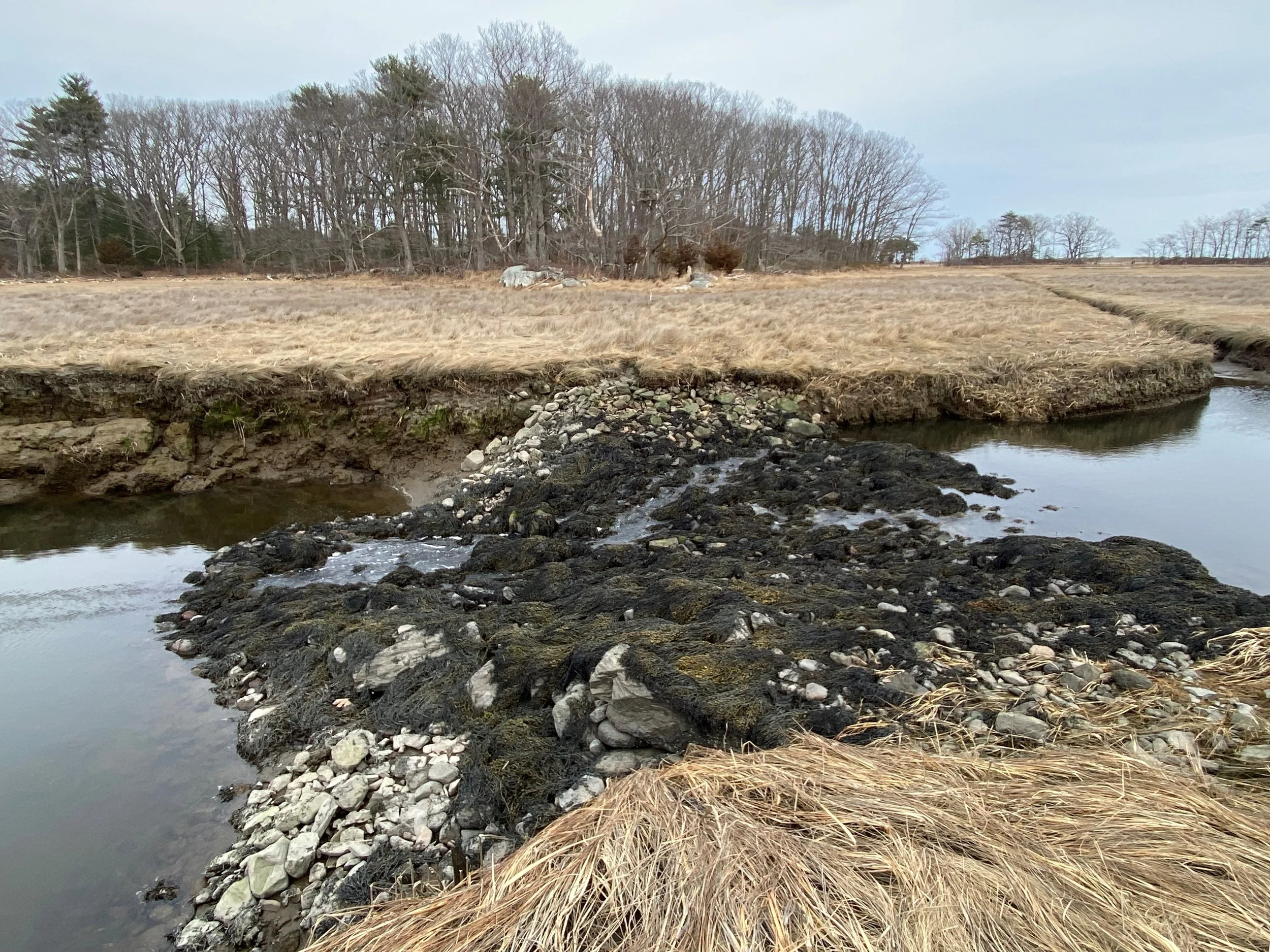
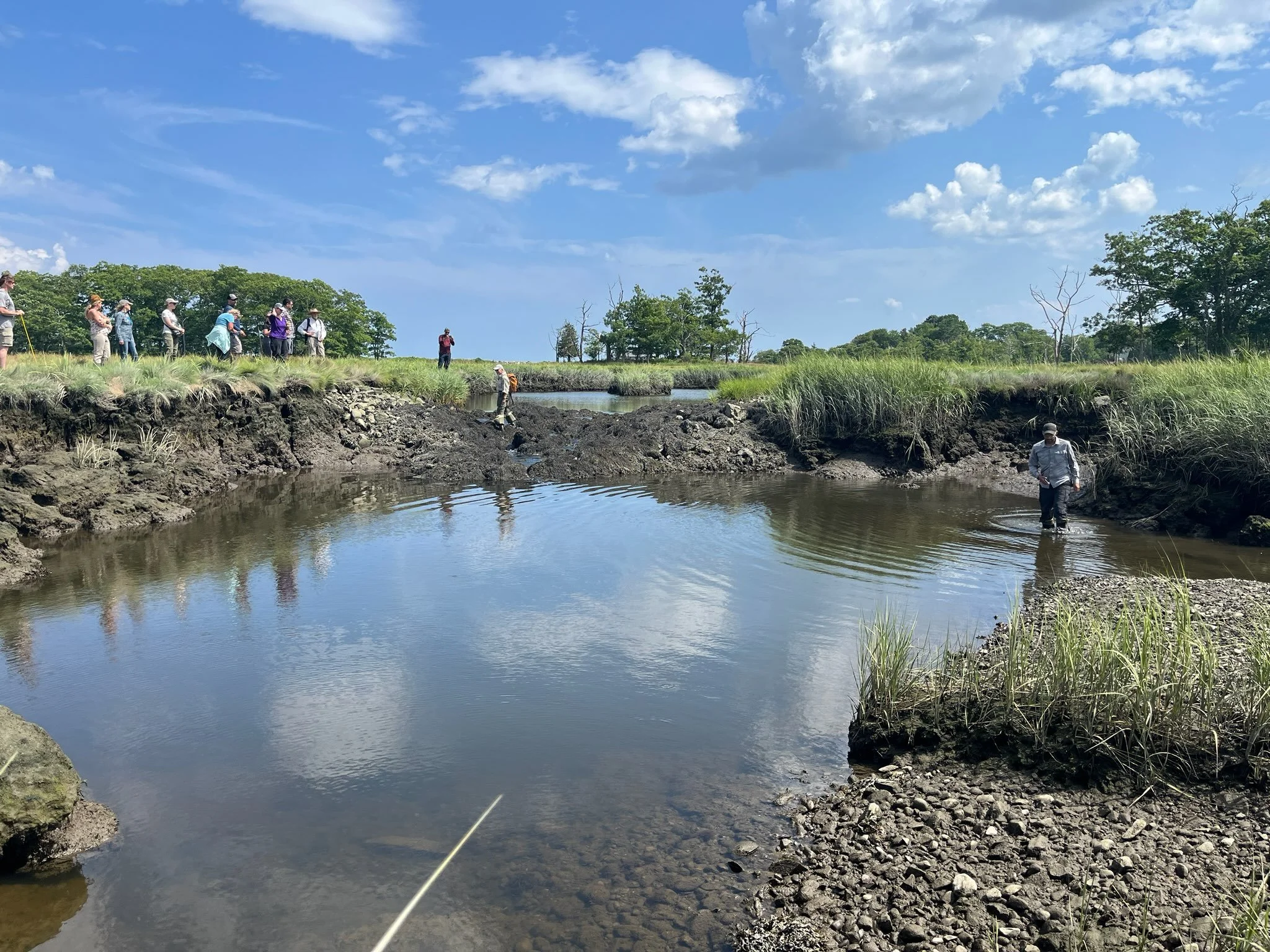
Modifying small sections of historic stone dams and other tidal restrictions to improve tidal exchange.
Creating small, elevated areas using on-site material to provide nesting habitat for the threatened Saltmarsh Sparrow.
Reducing invasive common reed (Phragmites australis) populations through Integrated Pest Management (IPM) practices and by restoring natural tidal conditions, which will allow native marsh vegetation to recover and increase over time.
Measuring Success:
Project partners, including the NHDES Coastal Program and the University of New Hampshire, will conduct long-term monitoring for several years following restoration to evaluate how the saltmarsh responds to implementation of restoration techniques. Monitoring will track changes in saltmarsh vegetation, hydrology, marsh elevations, soils, and wildlife habitat to measure project success and help inform future management adaptations.
-
Increased native saltmarsh vegetation
Improved tidal drainage and water flow
Reduced standing water and open-water expansion
Improved habitat for fish and wildlife, included the threatened Saltmarsh Sparrow
Increased resilience to sea level rise
Proven Restoration Approach
These restoration methods have been successfully implemented at salt marshes throughout New Hampshire and New England, including projects in Hampton, North Hampton, Hampton Falls, Parker River National Wildlife Refuge (MA), and Rachel Carson National Wildlife Refuge (ME).


What to check out the details of the final report?


Project Contacts:
NH Department of Environmental Services, Coastal Program:
Kevin Lucy: kevin.p.lucey@des.nh.gov
Aidan Barry: aidan.t.barry@des.nh.gov
Merissa Silva Robertson: merissa.g.silvarobertson@des.nh.gov

Rockingham County Conservation District
Tracy Degnan: tracy@rockinghamccd.org
